Phuket vs Bali: Villa Investment Comparison 2026 (Real Yield Data)
In this article10 sections
- Phuket vs Bali: Villa Investment Comparison 2026
- Ownership Structure: The Decisive Difference
- Rental Performance: Occupancy, Yield, and Consistency
- Head-to-Head Comparison: Key Investment Metrics
- Infrastructure and Accessibility
- Capital Appreciation and Exit Strategy
- Where Bali Excels
- Risk Assessment: What Could Go Wrong
- The Verdict: Which Market for Which Investor?
- Next Steps
Phuket vs Bali: Villa Investment Comparison 2026
Southeast Asia’s two most compelling villa markets sit barely three hours apart by air, yet they operate under fundamentally different legal frameworks, yield structures, and risk profiles. For investors weighing a villa purchase in 2026, the decision between Phuket and Bali is not merely aesthetic — it is a question of ownership security, rental performance, and long-term capital protection.
Both islands attract high-net-worth buyers seeking a blend of lifestyle and returns. Both deliver strong gross yields relative to Western markets. But when you strip away the marketing imagery and examine the underlying investment mechanics, one market consistently outperforms the other on the metrics that matter most to serious capital allocators.
This analysis draws on current 2026 market data, transaction records, and operational experience from developing and managing villa portfolios across both destinations.
Ownership Structure: The Decisive Difference
The single most consequential distinction between these two markets is what you actually own at the end of the transaction.
Thailand (Phuket)
Foreign nationals can hold freehold condominium ownership in their own name, provided the foreign quota (49% of total units in a registered condominium project) is not exceeded. This grants perpetual, inheritable, fully transferable title — identical in legal standing to ownership held by a Thai national within that quota.
For villa developments structured as condominium projects (common in Phuket’s premium segment), this means outright ownership with no expiry date, no renewal risk, and no dependency on political goodwill for tenure extension.
Indonesia (Bali)
Foreigners cannot hold freehold land in Indonesia. The strongest available tenure is Hak Pakai (Right to Use), which grants an initial 25-year term, extendable by 20 years, then renewable for a further 25 years — a theoretical maximum of 70 years, though no extension is guaranteed by statute.
Many Bali villa purchases still operate via nominee arrangements or PT PMA (foreign-owned company) structures, each carrying compliance complexity, ongoing costs, and a degree of legal vulnerability that would be unacceptable in most mature property markets.
For an investor with a 20-year horizon, this distinction alone reshapes the risk calculus entirely. Freehold ownership in Phuket carries zero tenure risk. Leasehold in Bali introduces a depreciating-asset dynamic that compounds over time.
Rental Performance: Occupancy, Yield, and Consistency
Both markets generate attractive rental returns by global standards, but their performance profiles differ in important ways.
Phuket Rental Metrics (2025-2026)
- Average occupancy: 75-85% annually for professionally managed villas in prime locations (Bangtao, Layan, Kamala)
- Peak season: November through April (6 months of sustained high demand)
- Shoulder demand: Strong year-round base from medical tourism, corporate retreats, and domestic Thai travel
- Net yield after management and maintenance: 7.5-8.5% on purchase price
- Average daily rate (3-bed luxury villa): $350-$650 depending on location and specification
Bali Rental Metrics (2025-2026)
- Average occupancy: 60-70% annually, with significant seasonal variance
- Peak season: June through September, plus Christmas/New Year (approximately 4-5 months of premium rates)
- Low season: January through March sees marked occupancy drops, particularly in areas dependent on Australian and European tourists
- Net yield after management and maintenance: 6.5-8% on purchase price
- Average daily rate (3-bed luxury villa): $250-$500 depending on area and standard
The critical difference is not the peak rate — Bali can command strong nightly rates during high season — but the consistency of demand throughout the year. Phuket’s longer peak season and diversified demand sources (Chinese, Russian, European, Middle Eastern, and domestic markets) create a more stable income stream with fewer vacancy periods.
Furthermore, Phuket’s rental management ecosystem is more mature and regulated. Thailand’s well-established hotel licensing framework means professional operators have clear legal footing, standardised service levels, and accountability structures that Bali’s more fragmented management landscape often lacks.
Head-to-Head Comparison: Key Investment Metrics
| Factor | Phuket, Thailand | Bali, Indonesia |
|---|---|---|
| Foreign ownership | Freehold (condominium title) | Leasehold (25+20+25 years max) |
| Entry price (3-bed luxury villa) | $250,000 – $500,000 | $300,000 – $600,000 |
| Net rental yield | 7.5% – 8.5% | 6.5% – 8.0% |
| Annual occupancy | 75% – 85% | 60% – 70% |
| Capital appreciation (off-plan to completion) | 15% – 20% | 10% – 15% |
| Peak season duration | 6 months (Nov-Apr) | 4-5 months (Jun-Sep + Dec) |
| International airport | HKT — direct flights to 60+ cities | DPS — direct to 40+ cities |
| Healthcare infrastructure | JCI-accredited international hospitals | Limited; serious cases require evacuation |
| International schools | 6+ established (British, American, IB) | 3-4 (growing but less established) |
| Political/regulatory stability | Stable; consistent foreign ownership laws since 1979 | Periodic regulatory shifts; moratorium risks |
| Resale liquidity | Strong — freehold attracts broader buyer pool | Limited — leasehold depreciation reduces appeal |
| Transfer taxes and fees | ~6.3% total (split buyer/seller) | ~5% BPHTB + notary; complex for foreign structures |
Infrastructure and Accessibility
Investment property is only as valuable as the demand it can attract, and demand follows infrastructure.
Phuket International Airport handled over 18 million passengers in 2025, with direct connections to major source markets across Europe, the Middle East, China, Russia, and Australia. The island’s road network, while imperfect, is significantly more developed than Bali’s notoriously congested single-lane roads in the south.
Healthcare is a decisive factor for both rental guests and owner-occupiers. Phuket hosts Bangkok Hospital Phuket and Siriroj International Hospital — both JCI-accredited, offering specialist care that draws medical tourists independently. Bali’s healthcare remains a known weakness; serious medical events typically require air evacuation to Singapore or Jakarta, adding a layer of risk that dampens long-stay appeal for older demographics.
For family investors who intend to spend time in their property, Phuket’s six established international schools offering British, American, and International Baccalaureate curricula provide optionality that Bali cannot yet match.
Capital Appreciation and Exit Strategy
The appreciation story diverges sharply when you factor in ownership structure.
In Phuket, off-plan villa purchases in established development corridors (Bangtao-Layan, Kamala, Rawai) have consistently delivered 15-20% capital gains between launch and completion — typically an 18-24 month build period. Because the buyer holds freehold title, the asset does not depreciate with time. A well-maintained villa in a prime location appreciates in line with land values, which in Phuket’s constrained geography (the island is only 543 square kilometres) have risen 8-12% annually over the past five years.
Bali’s appreciation story is more complex. While land values in Canggu, Uluwatu, and Ubud have risen dramatically — in some cases 20-30% per year at the raw land level — this does not translate directly to villa investment returns for foreign buyers. The leasehold structure means your asset is a depreciating instrument: a 25-year lease purchased today is worth progressively less with each passing year, unless extended. Resale typically requires discounting the remaining lease term, which erodes gains.
Put simply: in Phuket, time is your ally. In Bali, time works against you unless you actively manage lease renewals — a process that carries no statutory guarantee.
Where Bali Excels
Intellectual honesty requires acknowledging Bali’s genuine strengths as both a lifestyle destination and an investment market.
- Cost of living: Day-to-day expenses in Bali remain 20-30% lower than Phuket, which enhances the lifestyle proposition for owner-occupiers and appeals to the digital nomad demographic
- Cultural richness: Bali’s Hindu-Balinese culture, temple ceremonies, and artistic traditions create an atmosphere that many find more spiritually resonant than Phuket’s more commercially oriented environment
- Digital nomad ecosystem: Canggu and Ubud have become global hubs for remote workers, creating a reliable rental demand segment for mid-range properties
- Design and craftsmanship: Bali’s artisan tradition enables extraordinary bespoke interiors at lower cost, and the island’s architectural aesthetic — open-plan tropical living, natural materials — has global appeal
- Growing market momentum: Indonesia’s government has signalled intent to improve foreign ownership frameworks, and if legislation catches up with rhetoric, Bali’s fundamentals could improve significantly
These are real advantages. For a buyer whose primary motivation is lifestyle — who plans to live in the property full-time and is less concerned with rental yield optimisation or long-term capital security — Bali remains a compelling choice.
But for an investor making a capital allocation decision with a 10-20 year horizon, the structural advantages of Phuket’s ownership framework, rental consistency, and infrastructure maturity create a materially stronger risk-adjusted return profile.
Risk Assessment: What Could Go Wrong
Phuket Risks
- Oversupply in certain micro-locations (mitigated by choosing established developers with track records)
- Thai baht currency fluctuation (historically moderate; Thailand maintains strong reserves)
- Construction quality variance (due diligence on developer essential)
Bali Risks
- Lease non-renewal or unfavourable renegotiation terms at extension
- Regulatory changes affecting foreign land rights (Indonesia has enacted moratoriums previously)
- Nominee structure exposure if arrangements are challenged legally
- Infrastructure strain — water shortages, traffic congestion, waste management challenges in popular areas
- Volcanic and seismic activity (Mount Agung’s 2017 eruption caused months of tourism disruption)
The risk profiles are not equivalent. Phuket’s risks are largely market risks — manageable through due diligence and developer selection. Bali’s risks include structural and political risks that no amount of buyer-side diligence can fully mitigate.
The Verdict: Which Market for Which Investor?
Choose Bali if: your primary objective is lifestyle immersion, you plan to live full-time on the island, your investment horizon is under 10 years, and you are comfortable with leasehold tenure and its implications for resale.
Choose Phuket if: you are making a capital allocation decision that prioritises ownership security, consistent rental income, infrastructure quality, capital appreciation, and a clear exit strategy. If you want an asset that appreciates over time, can be inherited by your family, and generates reliable income while you are not using it — Phuket’s structural advantages are decisive.
For investors seeking both lifestyle and returns — the ability to enjoy a world-class holiday home while generating 7.5-8.5% net yields and building long-term equity — Phuket in 2026 offers a combination that Bali, for all its beauty, cannot match on paper.
Next Steps
If you are evaluating a villa investment in Phuket and want to understand current availability, pricing structures, and projected returns for specific developments, our Phuket investment overview provides detailed project information, payment plans, and yield projections based on actual operational data from our managed portfolio. Compare live inventory directly: browse Phuket villas for sale or Bali villas for sale.
Ready to Invest in Phuket?
Read our Phuket investment guide — ownership structures, yield projections, pricing, and floor plans.
View Phuket Investment GuideStay Informed
Luxury real estate insights — delivered to your inbox.
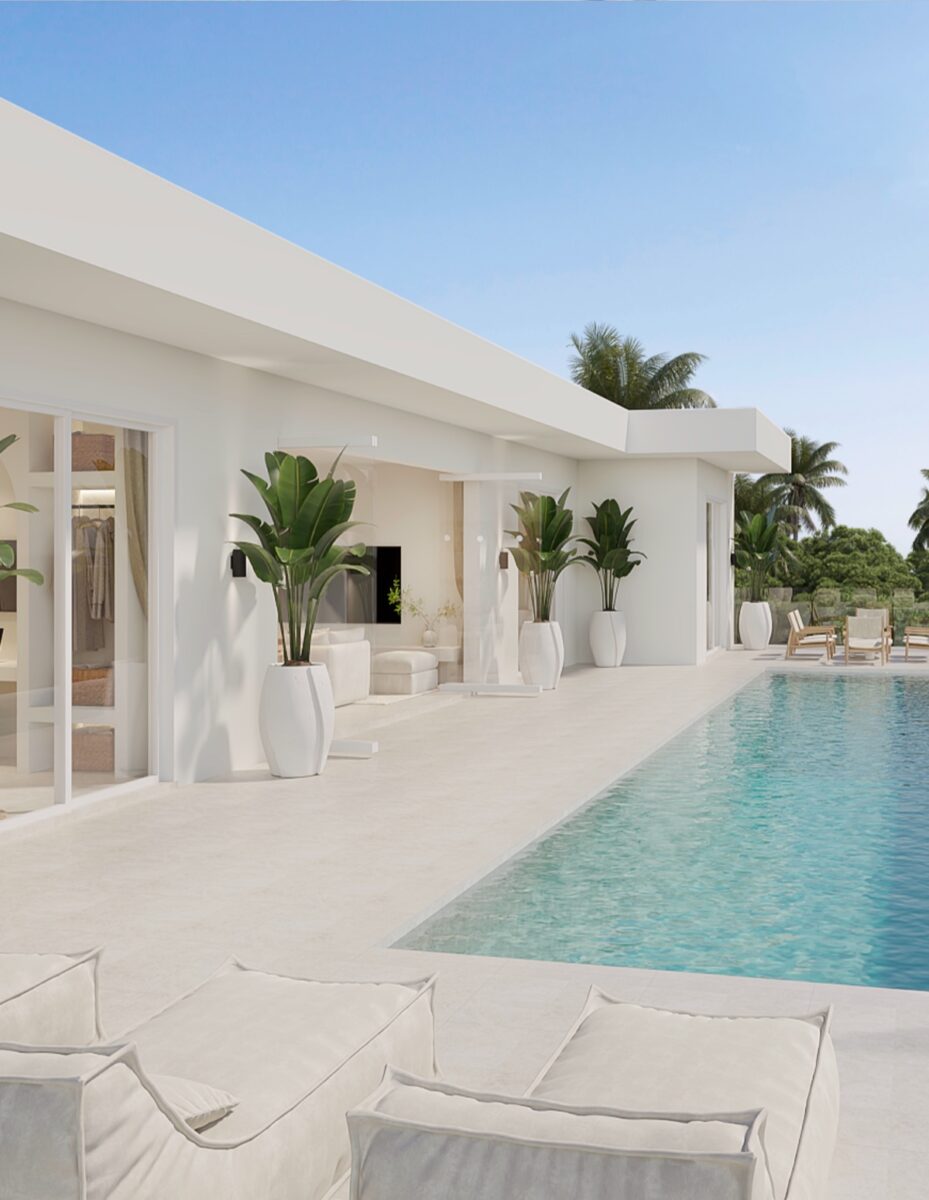
Sunrise Hills Koh Samui
Panoramic hillside villas in Koh Samui — contemporary luxury with ocean views.
View Development →from a Decade
in Real Estate SKHAI
10 Lessons from a Decade in Luxury Real Estate
What we’ve learned building villas across top global destinations — from due diligence to maximising rental returns.
Read the Free Guide →FREE INVESTMENT GUIDE
Get your Phuket investment guide
- Ownership structures explained
- Rental yield projections
- Complete pricing & floor plans
- Legal and tax overview
Free guide sent to your inbox. No spam.