Koh Samui vs Phuket: Which Island Delivers Better Villa Returns?
In this article12 sections
- Two Thai Islands, Two Investment Profiles
- The Numbers: Side-by-Side Performance Data
- The Airport Constraint Thesis: Why Samui’s Limitation Is Actually an Advantage
- Occupancy Patterns: How the Seasons Differ
- Area Guides: Where to Buy on Each Island
- Target Guest Profiles
- Growth Drivers: What Is Coming Next
- Ownership and Legal: Identical Framework, Same Protections
- Cost of Living and Management
- SKHAI Developments on Both Islands
- The Verdict: Phuket or Koh Samui?
- Frequently Asked Questions
Two Thai Islands, Two Investment Profiles
Thailand’s two premier island destinations for villa investment — Phuket and Koh Samui — attract different investor profiles despite sitting in the same country with the same legal framework. Phuket is the established heavyweight with international airport infrastructure and higher price points. Koh Samui is the boutique alternative with lower entry costs, scarcity-driven appreciation, and a loyal repeat-visitor base.
This analysis uses verified Staylar management data from both islands to compare everything that matters: yields, pricing, occupancy patterns, guest demographics, area opportunities, and growth drivers. If you are deciding between a Phuket villa and a Koh Samui villa, this is the data you need.
The Numbers: Side-by-Side Performance Data
| Metric | Koh Samui | Phuket |
|---|---|---|
| Net Yield (Annual) | 7.2 – 7.5% | 7.8 – 8.4% |
| Average Occupancy | 68 – 70% | 72 – 78% |
| Average Daily Rate | $190 – $260 | $250 – $300 |
| Entry Price (2-Bed Villa) | From $195,000 | From $280,000 |
| Entry Price (3-Bed Villa) | From $280,000 | From $380,000 |
| Peak Season | Dec – Apr (5 months) | Nov – Apr (6 months) |
| Price per sqm (Built Area) | $1,500 – $2,500 | $2,200 – $3,500 |
Key Takeaway: Phuket wins on absolute numbers — higher yields, higher ADR, higher occupancy. But Koh Samui’s significantly lower entry price means the capital efficiency story is more nuanced than the headline numbers suggest. An investor deploying $200,000 in Samui may generate comparable annual cash-on-cash returns to one deploying $300,000 in Phuket.
The Airport Constraint Thesis: Why Samui’s Limitation Is Actually an Advantage
Koh Samui’s airport (USM) is privately owned by Bangkok Airways, which limits flight capacity and keeps ticket prices higher than Phuket. Many investors see this as a disadvantage. It is actually one of Samui’s strongest investment advantages.
Here is why:
- Natural supply constraint: Limited air access means fewer mass-market tourists and fewer large hotel chains. This keeps the market boutique and protects villa rental rates from the downward pressure of hotel oversupply.
- Higher-spending guests: Visitors who pay more to get to Samui tend to spend more on accommodation. The guest demographic skews toward couples, families, and honeymooners willing to pay premium rates for private villa experiences.
- Development limitation: Reduced accessibility means slower development, which protects land values and prevents the oversupply that has compressed yields in some Phuket submarkets.
- Alternative access growing: International flights from Singapore, Kuala Lumpur, Hong Kong, and Chengdu are expanding. The Surat Thani ferry connection also brings guests via budget airlines to the mainland, providing a budget-friendly access alternative.
In short, Samui’s airport constraint creates a natural moat around property values and rental rates. It limits supply growth while demand continues to increase via new international routes and ferry connections.
Occupancy Patterns: How the Seasons Differ
Phuket Seasonal Calendar
- Peak (Nov – Apr): 85-95% occupancy, ADR premium +40-60%. European, Russian, and Middle Eastern long-stay guests dominate.
- Shoulder (May, Oct): 60-70% occupancy. Mix of Asian short-stay and early/late European travelers.
- Low (Jun – Sep): 50-60% occupancy. Heavily dependent on Asian markets (China, Korea, India) and domestic Thai tourism. Lower rates but consistent volume.
Koh Samui Seasonal Calendar
- Peak (Dec – Apr): 80-90% occupancy, ADR premium +35-50%. European couples, families, and honeymooners. Chinese New Year and Russian market are key.
- Shoulder (May, Nov): 55-65% occupancy. Transition months with weather variability.
- Low (Jun – Oct): 45-55% occupancy. Monsoon season, though Samui’s Gulf coast means different weather patterns than Phuket’s Andaman coast. July-August can still be strong for summer holiday travelers.
Analysis: Phuket’s longer peak season and stronger low-season occupancy give it an annual occupancy advantage of roughly 5-10 percentage points. This translates directly to higher annual revenue. However, Samui’s low-season months show improvement year over year as new international routes come online.
Area Guides: Where to Buy on Each Island
Phuket — Top Investment Areas
Bangtao / Laguna (West Coast): The gold standard for villa investment. Proximity to Laguna resort complex, Bang Tao Beach, and upscale restaurants drives consistently high occupancy and ADR. Most SKHAI Phuket developments are in this zone. Premium pricing but premium returns. See Bangtao investment details.
Kamala: Between Patong and Bangtao, offering a quieter alternative with strong beach access. Growing luxury development. Good value relative to Bangtao. See Kamala investment details.
Rawai / Nai Harn (South): Lower entry prices with authentic local feel. Strong with repeat visitors and long-stay guests. Growing restaurant and lifestyle scene.
Natai Beach (North): Emerging luxury corridor with large plots, quiet beaches, and proximity to Sarasin Bridge (easy Phang Nga Bay access). Lower prices but longer investment horizon.
Koh Samui — Top Investment Areas
Chaweng Noi: Premium sea-view location overlooking one of Samui’s best beaches. High ADR potential. Limited land supply drives appreciation. See Chaweng Noi investment details.
Bangrak / Bophut: North coast facing Koh Phangan. Fisherman’s Village area offers charming dining and nightlife. Strong with couples. Sunset views. See Bangrak investment details.
Coral Cove / Lamai: Mid-range entry prices with sea views. Growing luxury development. Quieter than Chaweng. Good for investors seeking value. See Coral Cove investment details.
Maenam: North coast, traditionally lower-priced. Strong with families and long-stay guests. Excellent value and growing infrastructure.
Target Guest Profiles
| Guest Type | Koh Samui | Phuket |
|---|---|---|
| Couples / Honeymoons | Very Strong | Strong |
| Families | Strong | Very Strong |
| Groups / Events | Moderate | Very Strong |
| Long-Stay (30+ nights) | Moderate | Strong |
| Digital Nomads | Growing | Very Strong |
| Wellness / Retreat | Very Strong | Strong |
Samui’s strength in the couples and honeymoon segment is notable because these guests typically book premium villas, stay 5-10 nights, and are less price-sensitive than family groups. This partially compensates for Samui’s lower overall occupancy.
Growth Drivers: What Is Coming Next
Phuket Growth Catalysts
- New international terminal at HKT airport (capacity to 25M passengers)
- Light rail project connecting airport to southern beaches
- Continued yacht marina development (Royal Phuket Marina, Ao Po Grand Marina)
- Medical tourism growth (Bangkok Hospital Phuket, international clinics)
- Smart city infrastructure investments
Koh Samui Growth Catalysts
- New international routes (Singapore Airlines, AirAsia, seasonal European charters)
- Government infrastructure investment: improved roads, water treatment, hospital expansion
- Full Moon Party tourism (neighboring Koh Phangan) creating spillover demand
- Growing wellness tourism sector (retreats, spas, yoga centers)
- Digital nomad infrastructure development (co-working spaces, fiber internet)
Ownership and Legal: Identical Framework, Same Protections
Both Phuket and Koh Samui operate under the same Thai property law. The ownership structures, legal protections, and registration requirements are identical:
- Freehold condominium ownership available (49% foreign quota)
- Villa ownership via a 30-year renewable registered leasehold (foreigners cannot own land directly)
- Land Office registration required for enforceability
- Same tax framework (transfer fees, rental income tax, stamp duty)
This means the choice between Samui and Phuket is purely an investment and lifestyle decision, not a legal or structural one. For detailed ownership guidance, see our Phuket Investment Guide and Koh Samui Investment Guide.
Cost of Living and Management
Koh Samui’s lower cost base extends to property management, maintenance, and staffing. This contributes to slightly lower operating costs that help protect net yields despite lower gross revenue:
- Staff wages: 10-15% lower than Phuket equivalents
- Maintenance costs: comparable for materials, lower for labor
- Utility costs: comparable
- Property insurance: slightly lower (smaller property values)
SKHAI Developments on Both Islands
SKHAI has active developments on both Phuket and Koh Samui, all with integrated Staylar rental management. Current projects include:
- Phuket: Sunrise Valley, Sunrise Palms, Sunrise Lake, Sunrise Garden
- Koh Samui: Sunrise Residences, Sunrise Hills, Sunrise Suites, Sunrise Park, Villa Maeva
The Verdict: Phuket or Koh Samui?
Choose Koh Samui if:
- Your budget is under $300,000 and you want a private pool villa
- You believe in the airport-constraint scarcity thesis
- You prefer a more intimate, boutique island atmosphere
- You are targeting the couples/honeymoon guest segment
- You want to enter at a lower price point and potentially scale to multiple units
Choose Phuket if:
- You want the highest absolute rental income and occupancy rates
- You value strong international airport connectivity
- You prefer established luxury infrastructure (hospitals, schools, marinas)
- You are targeting families, groups, and long-stay guests
- You have a budget above $300,000 and want premium positioning
Consider both: The two islands have different peak seasons and guest demographics. Holding properties on both provides year-round income optimization and guest market diversification. Many SKHAI investors start in Samui (lower entry) and expand to Phuket as their portfolio grows.
Frequently Asked Questions
Is Koh Samui a good place to invest in property?
Yes. Koh Samui delivers 7.2-7.5% net yields with entry prices from $195,000. Its natural supply constraint (private airport), growing international routes, and boutique positioning make it one of Thailand’s strongest villa investment markets for capital-efficient investors.
Why are Phuket villas more expensive than Koh Samui?
Phuket’s higher prices reflect its larger international airport, more developed infrastructure, deeper tourist market, and longer history as a luxury destination. These factors also support higher rental rates and occupancy, so the yield percentages are comparable despite higher capital requirements.
What occupancy can I expect in Koh Samui vs Phuket?
Staylar-managed villas in Phuket achieve 72-78% annual occupancy. Koh Samui properties achieve 68-70%. Phuket’s advantage comes from its longer peak season and stronger low-season demand from Asian markets.
Are both islands safe investments for foreigners?
Both operate under the same Thai legal framework with the same ownership structures and protections. Thailand has a stable property law environment with decades of foreign investment precedent. The key is proper legal structuring and working with reputable developers.
How do I get to Koh Samui?
Koh Samui Airport (USM) has direct flights from Bangkok (1 hour), Singapore, Kuala Lumpur, and Hong Kong. Alternatively, fly to Surat Thani on the mainland (served by AirAsia, Nok Air, and other budget carriers) and take a 1.5-hour ferry. New international routes are being added regularly.
Can I buy multiple villas across both islands?
Yes. SKHAI investors frequently hold properties on both islands. Each property operates under its own lease or ownership structure. Staylar provides consolidated reporting across all properties, regardless of location.
Which island has better capital appreciation potential?
Koh Samui currently shows stronger percentage appreciation (driven by limited supply and growing demand), while Phuket offers more predictable, steady growth from a higher base. Both islands benefit from Thailand’s strong tourism trajectory, targeting 40M+ visitors nationally by 2026.
What is the typical rental management fee?
Standard management fees on both islands are 20-25% of gross rental revenue. This covers marketing, bookings, guest management, housekeeping, maintenance coordination, and owner reporting. SKHAI developments include Staylar management within this range.
Yield and occupancy figures are based on Staylar portfolio performance data as of Q1 2026. Past performance does not guarantee future results. All investments carry risk. Consult qualified legal and financial advisors before making investment decisions.
Ready to compare specific properties? Contact us at [email protected] or call +66 65-242-3000.
Ready to Invest in Koh Samui?
Read our Koh Samui investment guide — ownership structures, yield projections, pricing, and floor plans.
View Koh Samui Investment GuideStay Informed
Luxury real estate insights — delivered to your inbox.
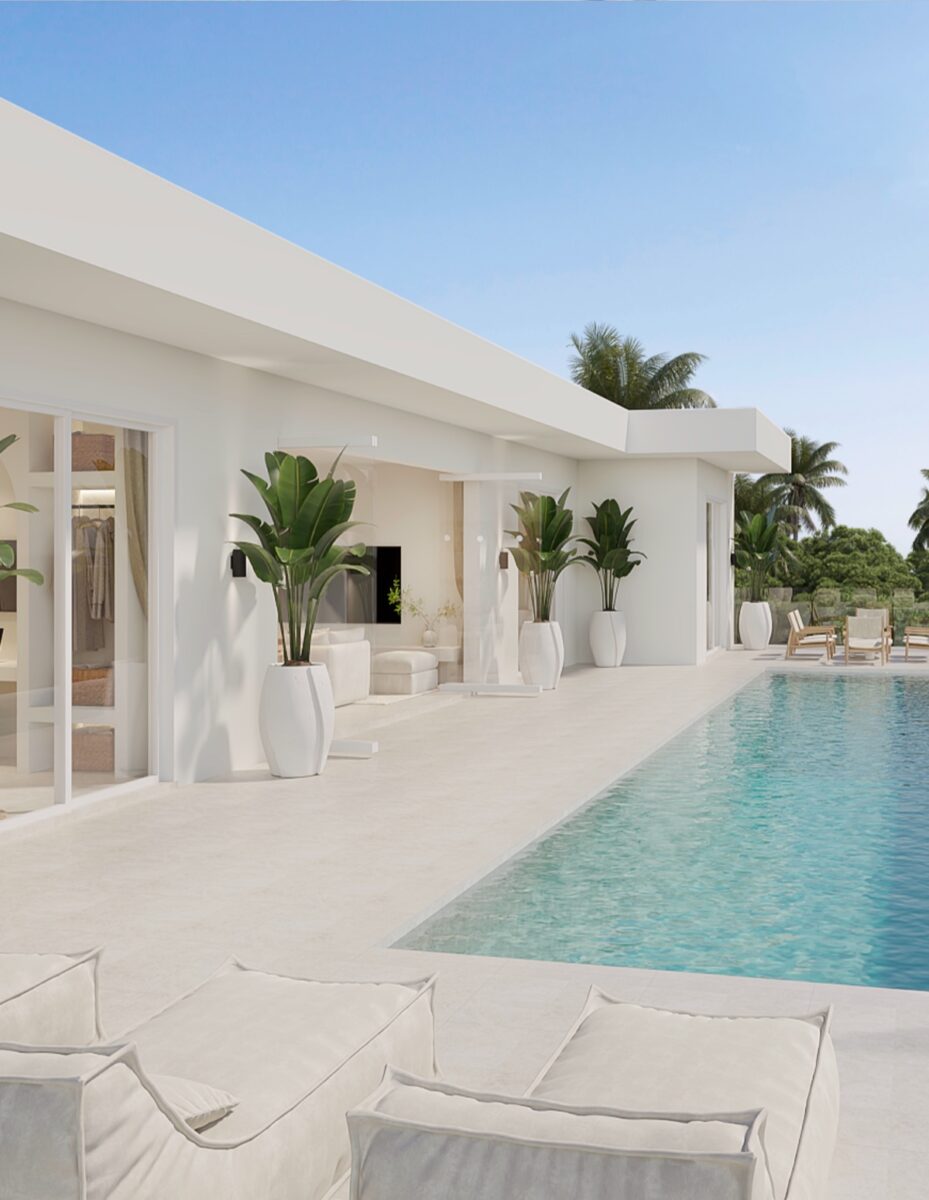
Sunrise Hills Koh Samui
Panoramic hillside villas in Koh Samui — contemporary luxury with ocean views.
View Development →from a Decade
in Real Estate SKHAI
10 Lessons from a Decade in Luxury Real Estate
What we’ve learned building villas across top global destinations — from due diligence to maximising rental returns.
Read the Free Guide →FREE INVESTMENT GUIDE
Get your Koh Samui investment guide
- Ownership structures explained
- Rental yield projections
- Complete pricing & floor plans
- Legal and tax overview
Free guide sent to your inbox. No spam.