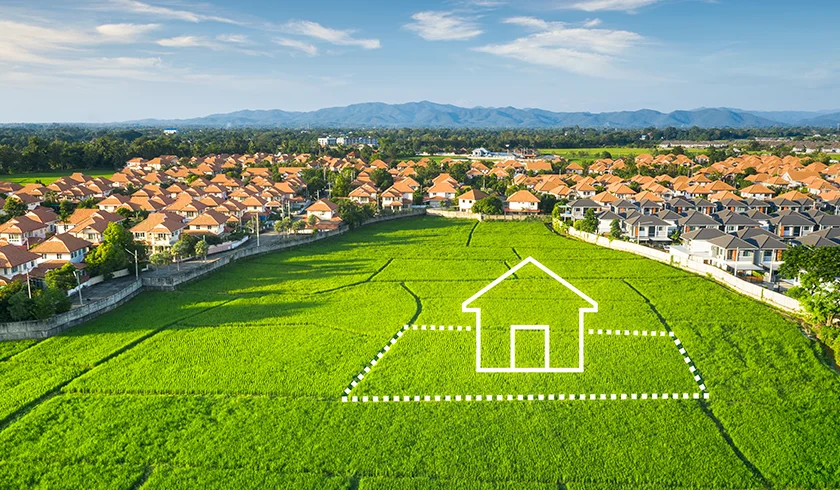
Aerial view of green fields with marked plots for high yield property Thailand.
Thailand Property Investment 2026: Phuket vs Koh Samui vs Bali — Real Yield Comparison
In this article14 sections
- Thailand Property Investment 2026: Real Yield Data from Phuket, Koh Samui, and Bali
- Destination Comparison: Yield, Occupancy, and Pricing at a Glance
- Phuket: Highest Occupancy, Most Mature Market
- Koh Samui: Dual Peak Season, Growing Market
- Bali: Highest Capital Growth Potential
- Ownership Structures Compared: Thailand vs. Indonesia
- Diversification Strategy: Investing Across Multiple Destinations
- Which Destination Matches Your Investment Goals?
- Guest Demographics: Who Rents Luxury Villas in Each Destination
- How SKHAI’s Developer-to-Management Model Works
- Total Return Analysis: Villa Investment vs Traditional Assets
- Frequently Asked Questions
- 2026 Market Outlook: What to Expect in Each Destination
- Start Your Investment Research

Thailand Property Investment 2026: Real Yield Data from Phuket, Koh Samui, and Bali
SKHAI develops and manages luxury pool villas across three of Southeast Asia’s strongest rental markets: Phuket, Koh Samui, and Bali. Through our rental management arm Staylar, we track actual performance data across 40+ managed properties. The numbers below are not projections or industry averages. They are real results from real properties under professional management.
In 2025, our portfolio delivered net yields ranging from 7.2% to 8.4%, with annual occupancy rates between 68% and 78%. This guide compares every destination side by side so you can allocate your investment capital where the returns are strongest.
Destination Comparison: Yield, Occupancy, and Pricing at a Glance
| Metric | Phuket | Koh Samui | Bali |
|---|---|---|---|
| Net Rental Yield | 7.8% – 8.4% | 7.2% – 7.5% | 8.0% |
| Annual Occupancy | 72% – 78% | 68% – 70% | 72% |
| Entry Price (2-bed villa) | $250,000 | $220,000 | $200,000 |
| Avg. Daily Rate (peak) | $250 – $450 | $200 – $380 | $180 – $350 |
| Peak Season | Nov – Apr | Dec – Mar, Jul – Aug | Jun – Sep, Dec – Jan |
| 5-Year Capital Growth | 35% – 50% | 25% – 40% | 40% – 60% |
| Foreign Ownership | Renewable Leasehold | Renewable Leasehold | Leasehold (25+25+25) |
| Tourist Arrivals (2025) | ~10M+ | ~1.5M | ~6.5M |
| SKHAI Developments | 5 projects | 7 projects | 1 project |
Source: Staylar rental management performance data (2024-2025). Net yield = gross rental income minus management fees, maintenance, insurance, taxes, and vacancy. Capital growth based on comparable transaction data.
Phuket: Highest Occupancy, Most Mature Market
Phuket is SKHAI’s strongest-performing destination by occupancy. Thailand welcomed 32.97 million foreign tourists in 2025, and Phuket captures the largest share of luxury travelers with direct international flights from over 40 cities.
Portfolio Performance Data
| Development | Net Yield | Occupancy | Area |
|---|---|---|---|
| Sunrise Garden Phuket | 8.4% | 78% | Bangtao |
| Sunrise Palms Phuket | 8.1% | 74% | Bangtao |
| Sunrise Valley Phuket | 7.8% | 72% | Layan / Pasak |
Why Phuket Leads on Occupancy
Phuket’s west coast achieves the highest occupancy rates in our portfolio for three reasons: the volume of international direct flights creates a deep and diversified guest pool; the island’s infrastructure (hospitals, schools, shopping, dining) supports both short-stay tourists and long-stay digital nomads; and the beach club and lifestyle scene keeps evolving, attracting a younger, higher-spending demographic.
The growing segment of 30-90 day digital nomad bookings has been particularly impactful. These guests accept lower nightly rates but provide guaranteed income with minimal turnover costs, effectively raising the occupancy floor during traditional low season months (May-October).
Investment Entry Points
2-bedroom pool villas in Phuket’s Layan-Pasak corridor start from $250,000 off-plan. Central Bangtao 3-bedroom villas range from $400,000 to $800,000. For a detailed area-by-area breakdown, see our Phuket area investment guide.
Explore Phuket investment opportunities
Koh Samui: Dual Peak Season, Growing Market
Koh Samui’s villa investment market surged 63.5% in residential investment value during the first half of 2025. Unlike Phuket’s single peak season (November-April), Samui benefits from two distinct high seasons: the European winter escape (December-March) and the summer family holiday window (July-August). This dual-peak dynamic creates more even income distribution across the year.
Portfolio Performance Data
| Development | Net Yield | Occupancy | Area |
|---|---|---|---|
| Coral Cove Residences Koh Samui | 7.5% | 70% | Chaweng Noi |
| Sunrise Residences Koh Samui | 7.2% | 68% | Bangrak |
Why Samui Is Gaining Investor Attention
Three developments are reshaping Samui’s investment landscape:
- Airport expansion: The privately-owned Samui International Airport is expanding capacity and adding new direct routes, increasing accessibility from key source markets
- Luxury repositioning: New five-star hotel openings and branded residence projects are elevating the island’s market positioning, driving up both guest expectations and willingness to pay premium nightly rates
- Supply scarcity: Koh Samui’s geography (smaller island, mountainous interior) naturally limits supply, supporting long-term price appreciation
Investment Entry Points
Samui offers the most accessible entry point in SKHAI’s portfolio. 2-bedroom pool villas start from $220,000 in areas like Bangrak and Bophut. Sea-view villas in Chaweng Noi range from $350,000 to $700,000. SKHAI has 7 developments across the island at various stages.
Explore Koh Samui investment opportunities
Bali: Highest Capital Growth Potential
Bali delivers the strongest capital appreciation in our portfolio, with land values in emerging areas like Canggu and Pererenan increasing 40-60% over five years. The island’s combination of cultural appeal, digital nomad infrastructure, and limited supply of quality villa developments creates a compelling growth story.
Portfolio Performance Data
| Development | Net Yield | Occupancy | Area |
|---|---|---|---|
| Core Villas Bali | 8.0% | 72% | Canggu |
Why Bali Stands Out for Growth
Indonesia’s government has invested heavily in Bali’s infrastructure: improved roads, a new toll road to the airport, and expanded water and power systems. The island received approximately 6.5 million foreign visitors in 2025, and the Indonesian government targets continued growth.
For villa investors, Bali’s advantage is the convergence of high rental demand (driven by tourism and the digital nomad community) with relatively low entry prices. A well-positioned 2-bedroom pool villa in Canggu can be acquired for $200,000-$350,000, generating strong yield percentages that outpace many Thai locations.
Ownership Structure in Bali
Foreign ownership in Indonesia follows a different legal framework than Thailand. The standard structure for foreign investors is a Hak Pakai (Right to Use) lease, typically structured as 25+25+25 years. While shorter than Thailand’s 30-year renewable leasehold, the framework is well-established and commonly used by international investors.
Key differences from Thailand: Indonesian property taxes are lower, but the regulatory environment is less mature. Working with an established developer who manages the full legal process is essential. SKHAI handles all documentation, permits, and lease registration for Core Villas Bali investors.
Explore Bali investment opportunities
Ownership Structures Compared: Thailand vs. Indonesia
The legal framework for foreign property ownership differs significantly between Thailand and Indonesia. Understanding these structures is critical before committing capital.
Thailand: Renewable Leasehold
The standard foreign ownership structure in Thailand is a registered leasehold, typically structured as 30 years (renewable). The initial 30-year term is registered at the Land Department and is legally enforceable. The subsequent renewal periods are contractual but widely upheld in practice.
Key protections for investors:
- The lease is registered on the title deed at the Land Office, creating a legal encumbrance that protects the lessee’s rights
- The lease is transferable and inheritable, meaning you can sell or pass on the property during the lease term
- SKHAI’s leasehold agreements include standard renewal provisions with pre-agreed terms
Foreigners cannot own land directly. Using a Thai company with nominee shareholders to hold land for a foreigner is illegal under Thai law, so SKHAI structures every villa as a registered leasehold. This approach requires careful legal structuring with a qualified Thai property lawyer. SKHAI works with established legal firms in both Phuket and Koh Samui who specialize in foreign property transactions.
For a detailed comparison, read: Freehold vs Leasehold Ownership in Thailand
Indonesia (Bali): Hak Pakai (Right to Use) Lease
In Indonesia, foreign individuals cannot own freehold land (Hak Milik). The most common structure is Hak Pakai (Right to Use), which grants a renewable lease of 25+25+25 years (75 years total). Recent regulatory changes have strengthened the position of Hak Pakai holders.
Alternatively, many foreign investors purchase through a PT PMA (foreign-owned Indonesian company), which can hold a broader range of land rights. SKHAI manages all legal documentation for Core Villas Bali investors through established Indonesian legal partners.
Tax Implications by Destination
| Tax Type | Thailand (Phuket/Samui) | Indonesia (Bali) |
|---|---|---|
| Annual property tax | Minimal (residential exemptions apply) | 0.5% of government-assessed value |
| Rental income tax | Withholding 5-15% | 10% final tax on gross income |
| Transfer fee (on purchase) | ~6.3% (split buyer/seller) | ~10% (BPHTB + notarial fees) |
| Capital gains on sale | Specific business tax ~3.3% | 2.5% of gross sale price |
Tax treatment varies based on your country of tax residence and any applicable double-tax treaties. We recommend consulting with a cross-border property tax specialist before making a purchase decision.
Diversification Strategy: Investing Across Multiple Destinations
Some SKHAI investors allocate capital across two or three destinations to diversify their risk and revenue streams. This strategy offers several advantages:
- Seasonal hedging: Phuket’s peak season (November-April) overlaps only partially with Bali’s peak (June-September and December-January). Owning in both markets provides more even income distribution across the calendar year.
- Currency diversification: Revenue from Thailand is in Thai Baht while Bali income is in Indonesian Rupiah or USD. Holding assets in multiple currencies reduces single-currency exposure.
- Market cycle protection: Tourism and property markets do not move in perfect correlation across countries. A downturn in one market may not affect the other.
- Growth vs. income balance: Combining a Phuket property (highest occupancy, most consistent income) with a Bali property (highest capital appreciation) creates a portfolio balanced between current yield and long-term growth.
A common allocation for a $600,000 investment budget: one 3-bedroom villa in Phuket (~$350,000-$400,000) plus one 2-bedroom villa in Bali (~$200,000-$250,000). Combined projected return: 8-9% blended net yield plus 8-10% capital appreciation.
Which Destination Matches Your Investment Goals?
The right choice depends on your priorities. Here is how we recommend matching destination to investor profile:
Choose Phuket If You Want:
- Maximum rental income consistency (highest occupancy rates)
- The most mature and liquid property market
- Strong infrastructure for personal use
- Access to the largest pool of international rental guests
Choose Koh Samui If You Want:
- Lower entry prices with strong yield potential
- Dual-peak season income distribution
- A quieter island lifestyle for personal use
- Exposure to a rapidly appreciating emerging market
Choose Bali If You Want:
- Maximum capital appreciation potential
- Lowest entry prices in our portfolio
- Exposure to Indonesia’s growing tourism economy
- Access to the global digital nomad rental market
Guest Demographics: Who Rents Luxury Villas in Each Destination
Understanding your guest profile helps you evaluate the sustainability and growth potential of rental demand in each destination.
Phuket Guest Profile
Phuket attracts the most diverse guest mix. The primary segments are:
- European couples and families (40%): Predominantly from the UK, Germany, Scandinavia, and France. Book 7-14 night stays during November-April. Average spend: $200-$400/night for 3-bedroom villas.
- Russian and CIS travelers (20%): Strong demand from October-March. Higher average daily rates but shorter average stay. This segment has grown significantly since 2023.
- Digital nomads and remote workers (15%): Book 30-90 day stays. Lower nightly rates ($80-$150) but exceptional occupancy impact. Growing segment, particularly in Bangtao and Cherngtalay where co-working infrastructure exists.
- Asian luxury travelers (15%): Chinese, Korean, Singaporean, and Hong Kong guests. High spending, concentrated around Chinese New Year and national holidays.
- Middle Eastern guests (10%): Growing segment, particularly June-August. Extended family bookings of larger 4-5 bedroom villas at premium rates.
Koh Samui Guest Profile
Samui’s guest mix skews more toward European and Australian long-stay visitors:
- European families (45%): Longer average stays (10-21 days) than Phuket, particularly during UK/German school holidays
- Australian couples and groups (20%): Strong demand July-August and December-January, aligned with Australian holiday seasons
- Wellness and retreat guests (15%): Samui’s wellness positioning attracts guests seeking yoga retreats, detox programs, and longer healing stays
- Honeymooners and couples (20%): Smaller villas (1-2 bedroom) command premium rates for romantic getaways
Bali Guest Profile
Bali has the youngest average guest demographic and the highest proportion of digital nomads:
- Digital nomads and remote workers (35%): The largest segment, booking 30-90 day stays concentrated in Canggu and Seminyak. Lower nightly rates but exceptional occupancy stability.
- Australian tourists (25%): Short-haul destination for Australian holidaymakers. Strong demand year-round with peaks during Australian school holidays.
- European luxury travelers (20%): June-September peak, 7-14 night stays at premium rates.
- Domestic Indonesian travelers (20%): Growing segment, particularly during Indonesian national holidays. Important for occupancy during traditional low periods.
This guest mix analysis matters for investment planning because it determines revenue stability. Phuket’s diversified guest base provides the most consistent income. Bali’s high digital nomad concentration creates long booking windows but at lower nightly rates. Samui’s European focus means stronger seasonality but higher average spend per booking.
How SKHAI’s Developer-to-Management Model Works
SKHAI is one of a small number of developers that both builds and manages investment villas through an integrated rental management operation. This matters for returns because:
- Build quality = lower maintenance costs: Our villas are built to rental-grade specifications from day one, with durable materials, efficient layouts, and pool systems designed for daily use
- Staylar management is not optional: Every SKHAI development comes with professional rental management through Staylar, ensuring consistent yield delivery from handover
- Revenue data drives development: We use actual rental performance data to inform the design, sizing, and amenity choices in new developments, optimizing for revenue rather than visual appeal alone
This closed-loop approach is why SKHAI properties consistently outperform area averages. When the developer and manager are the same company, incentives are aligned: we only profit when our investors profit.
Read more about our management approach: How SKHAI Manages Your Villa Investment
Total Return Analysis: Villa Investment vs Traditional Assets
Sophisticated investors evaluate villa investment against their broader portfolio options. Here is how SKHAI’s managed villas compare:
| Asset Class | Annual Income Yield | Capital Growth (5yr avg) | Total Return |
|---|---|---|---|
| SKHAI Managed Villas | 7.2% – 8.4% | 5% – 12% | 12% – 20% |
| Global REITs | 3.5% – 5.0% | 2% – 6% | 5.5% – 11% |
| S&P 500 (dividends + growth) | 1.3% | 8% – 10% | 9% – 11% |
| UK/EU Residential Buy-to-Let | 3.0% – 5.0% | 2% – 5% | 5% – 10% |
| Corporate Bonds | 4.0% – 5.5% | 0% | 4% – 5.5% |
Villa investment’s advantage is the combination of high income yield (paid quarterly from rental revenue) with capital appreciation in a growing market. The personal-use benefit is an additional non-financial return that other asset classes cannot replicate.
For a detailed breakdown of the ROI calculation, see our pillar guide: Thailand Villa Investment ROI: Developer Guide to Real Returns
Frequently Asked Questions
What is the best country in Southeast Asia for property investment?
Thailand and Indonesia (Bali) lead Southeast Asia for foreign villa investment. Thailand offers the most established legal framework and highest occupancy rates. Bali offers the strongest capital appreciation. SKHAI operates in both markets, with net yields of 7.2-8.4% across all destinations.
Is Thailand property investment safe for foreigners?
Yes, with proper legal structuring. Thailand’s leasehold system (30-year renewable years, registered at the Land Office) has been used by foreign investors for decades. The key risk factors are developer reliability and construction quality, not the legal framework itself. Working with an established developer like SKHAI, which also manages rental operations, significantly reduces execution risk.
How does Phuket compare to Bali for villa rental income?
Phuket delivers higher occupancy (72-78% vs. 72%) and higher average daily rates due to a wealthier tourist demographic. Bali offers lower entry prices, resulting in similar or slightly higher yield percentages (8.0% net). Phuket is the safer choice for consistent income; Bali is the better choice for capital growth.
What net yield should I expect from a Thailand villa investment?
With professional management through Staylar, SKHAI villas deliver 7.2-8.4% net yield after all expenses. This is the net figure after deducting management fees (20-25%), maintenance, insurance, and taxes. Gross yields are typically 10-14%. Self-managed properties typically achieve 2-3 percentage points lower net yield due to lower occupancy and ADR.
Can I use the villa myself and still earn rental income?
Yes. Most SKHAI investors reserve 2-8 weeks per year for personal use and rent the property for the remainder. Personal use during peak season (December-February) has the highest opportunity cost. We recommend scheduling personal use during shoulder season months to maximize annual rental revenue.
What are the tax implications of owning a villa in Thailand?
Thailand does not have an annual property tax on residential properties under certain value thresholds. Rental income is subject to Thai withholding tax (typically 5-15% depending on structure). There is no capital gains tax per se, but a specific business tax may apply on sale. Tax treatment varies by your country of residence. We recommend consulting a cross-border tax advisor.
How do I finance a villa purchase in Thailand or Bali?
Local bank financing for foreign buyers is limited in both markets. Most SKHAI investors use: equity from their home country, developer payment plans (typically 30% deposit, balance on completion for off-plan), or refinancing existing assets. SKHAI offers structured payment plans on all off-plan developments.
What is the minimum investment for a SKHAI villa?
The lowest entry point across our portfolio is approximately $200,000 for a 2-bedroom pool villa in Bali (Core Villas). In Thailand, Koh Samui starts from $220,000 and Phuket from $250,000. All prices are for complete, furnished pool villas with rental management included.
2026 Market Outlook: What to Expect in Each Destination
Each of SKHAI’s three destination markets has distinct macro tailwinds heading into 2026-2027.
Phuket 2026 Outlook
Phuket’s luxury villa segment is supported by record-breaking tourism numbers (Thailand welcomed 32.97 million visitors in 2025), expanding international flight routes, and a constrained supply of buildable land on the west coast. The Phuket Smart City initiative and planned second international airport will further enhance the island’s appeal to premium travelers and long-stay residents.
We expect net yields to remain stable at 7-8.5% for well-located, professionally managed villas, with capital appreciation of 8-12% annually driven by land scarcity and rising construction costs.
Koh Samui 2026 Outlook
Samui is in the early stages of a market repositioning from mid-range to luxury. The 63.5% surge in residential investment value in H1 2025 signals strong institutional confidence. Airport expansion plans will increase visitor capacity, and new luxury hotel brands are elevating the island’s positioning. Entry prices remain 20-30% below equivalent Phuket properties, creating a window for early investors to benefit from the market’s maturation.
Bali 2026 Outlook
Indonesia’s government continues to invest heavily in Bali’s infrastructure and tourism capacity. The digital nomad demographic is creating a new year-round demand floor that did not exist before 2020. Land prices in Canggu and Pererenan are rising rapidly (15-20% annually in some micro-locations), suggesting that the capital appreciation window for early investors is narrowing. Core Villas Bali’s Canggu location captures this growth while offering the security of a developer-managed asset.
Start Your Investment Research
SKHAI develops luxury pool villas across Phuket, Koh Samui, and Bali, all professionally managed by Staylar for consistent rental returns. Our current portfolio includes off-plan developments with structured payment plans and completed villas generating immediate income.
Download our investment prospectus for detailed pricing, projected returns, and development timelines across all three destinations. Or book a discovery call with Allen, our investment advisor, to discuss which destination and development matches your portfolio objectives.
Explore by destination: Phuket | Koh Samui | Bali | All Developments
Stay informed
Curated luxury real estate insights — direct to your inbox.
Ready to Invest?
Explore our investment guides for Phuket, Koh Samui, and Bali — ownership, yields, and pricing.
View Investment GuidesStay Informed
Luxury real estate insights — delivered to your inbox.
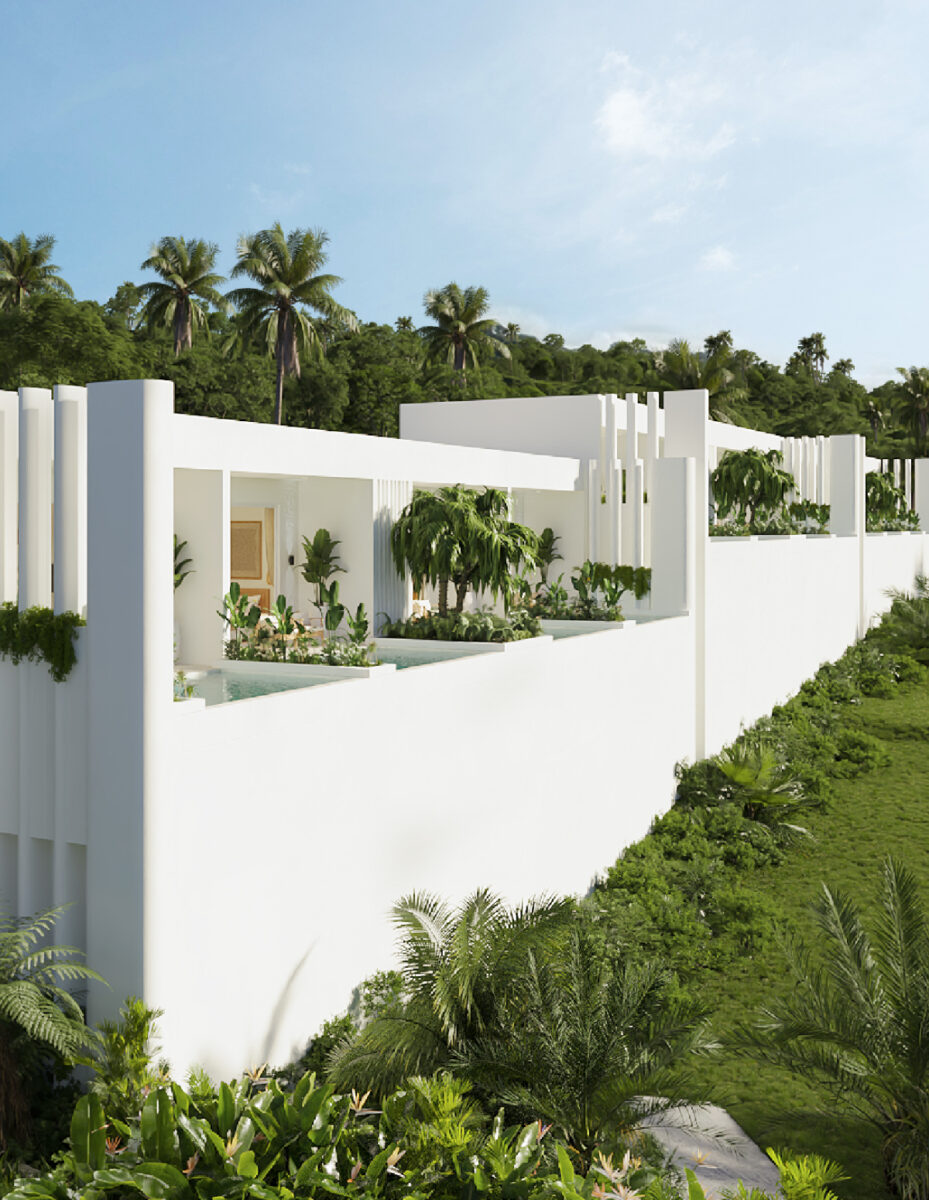
Sunrise Suites Koh Samui
Boutique suites on Koh Samui — designed for premium hospitality investment.
View Development →from a Decade
in Real Estate SKHAI
10 Lessons from a Decade in Luxury Real Estate
What we’ve learned building villas across top global destinations — from due diligence to maximising rental returns.
Read the Free Guide →STAY INFORMED
Luxury living, smart investing
Curated insights on real estate investment across Phuket, Koh Samui & Bali. Direct from the developer.
Free guide sent to your inbox. No spam.