
Phuket
An Island of World-Class Appeal
Read more
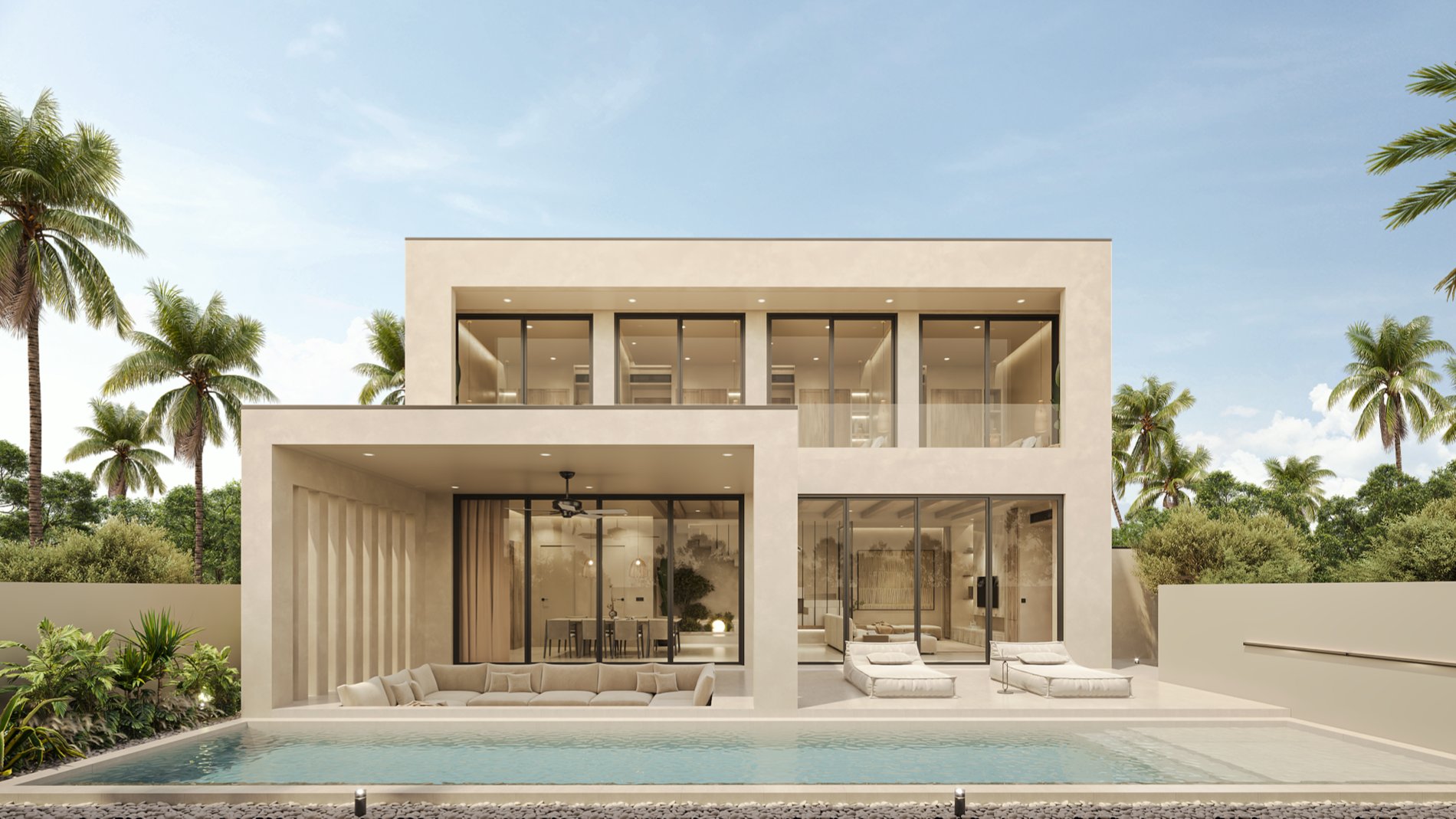
SKHAI develops luxury pool villas in Phuket's highest-performing west coast corridors. From THB 9.99M, fully managed by Staylar.
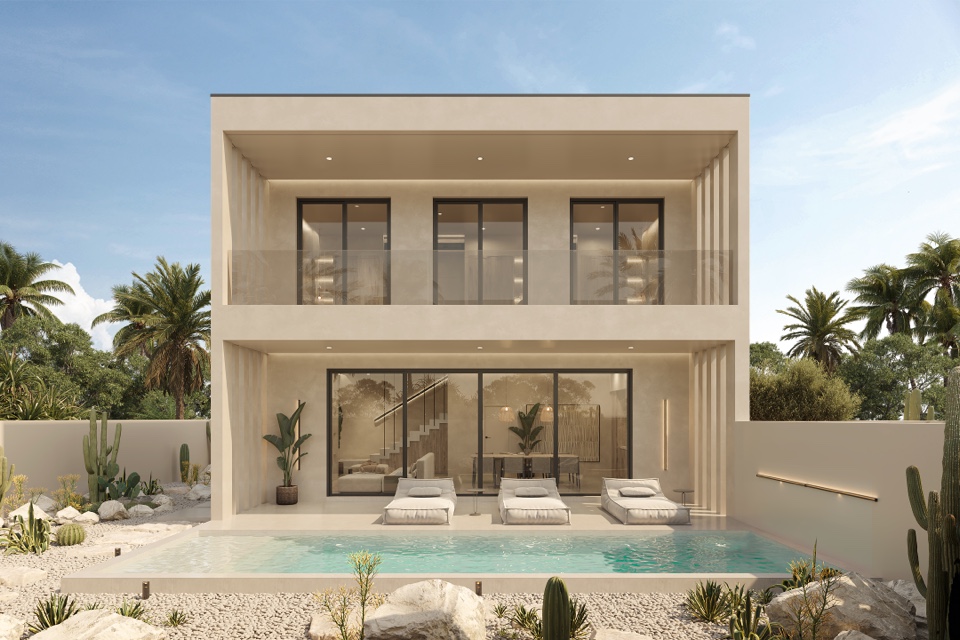
Phuket’s villa market continues to deliver strong fundamentals. Foreign buyers account for over 60% of high-end purchases — a proportion that has grown consistently since the post-pandemic reopening in late 2021.
The numbers behind this demand are structural, not cyclical. Phuket welcomed 9.89 million visitors in 2024, with airport passenger throughput reaching 16.2 million — a 97.5% recovery against 2019 benchmarks. Hotel occupancy across the west coast averaged 79.5% for the year, while professionally managed private pool villas in prime corridors achieved 70–80% annual occupancy and 85–92% during high season (November through April). Revenue per available night for 3-bedroom villas in the Bang Tao corridor averaged THB 179,000 per month through short-term rental platforms.
These demand fundamentals, combined with finite island geography and constrained west coast land supply, have supported consistent price appreciation across the villa segment. Well-located Phuket villas have shown steady capital growth over recent years, with prime corridors like Cherng Talay and Bang Tao performing particularly well.
SKHAI focuses on the key sub-corridors of Bangtao — specifically Pasak 8 and Manik — that deliver Laguna-comparable rental yields at entry prices well below the market premium. These areas sit within the broader Cherng Talay ecosystem, drawing from the same international tourist and expat rental demand pool: beach clubs, international schools, Boat Avenue, Porto de Phuket, and the Laguna complex. Yet entry pricing for a SKHAI pool villa starts from THB 9.99M — meaningfully below the THB 15–20M starting point for comparable villas in Bang Tao core. Same corridor. Same occupancy. A fraction of the capital.
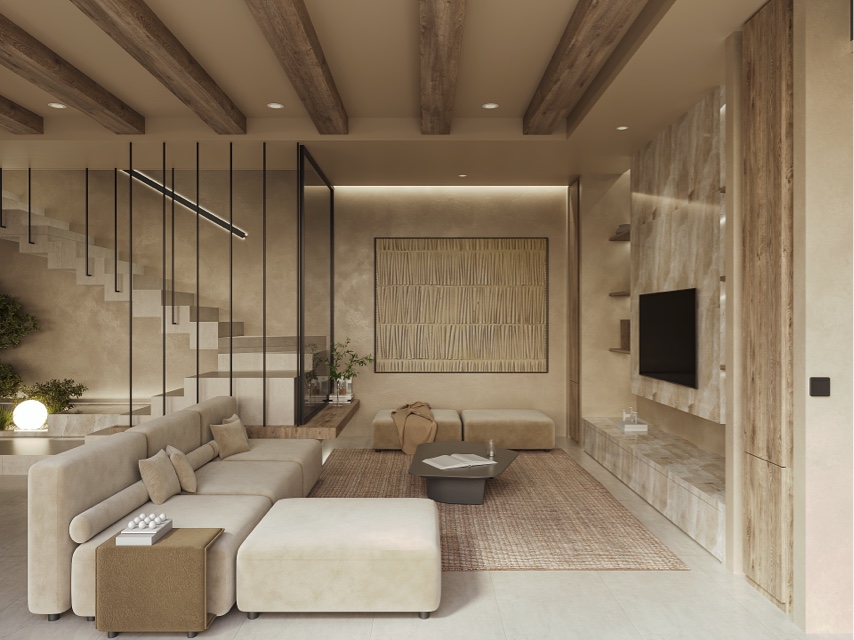
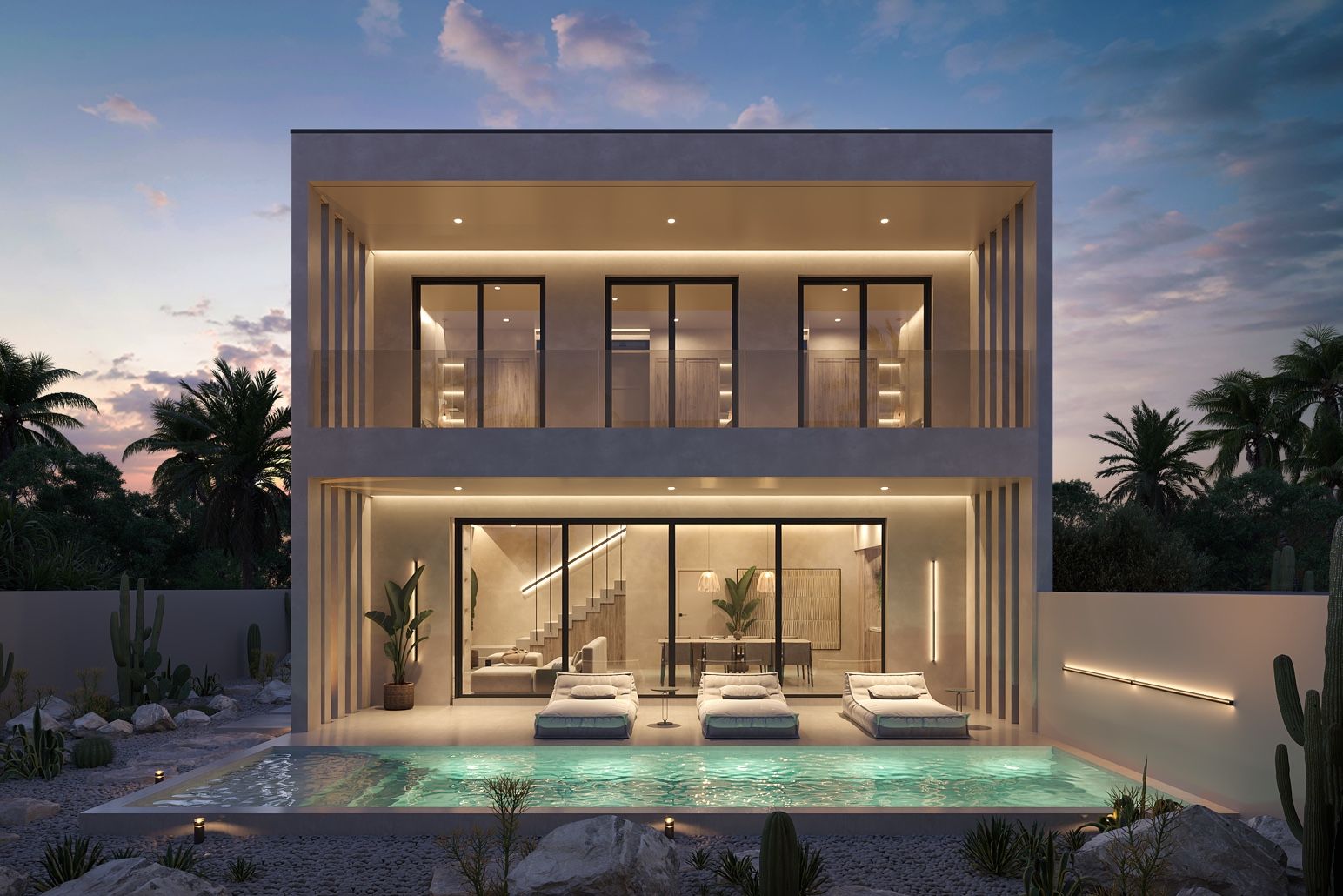
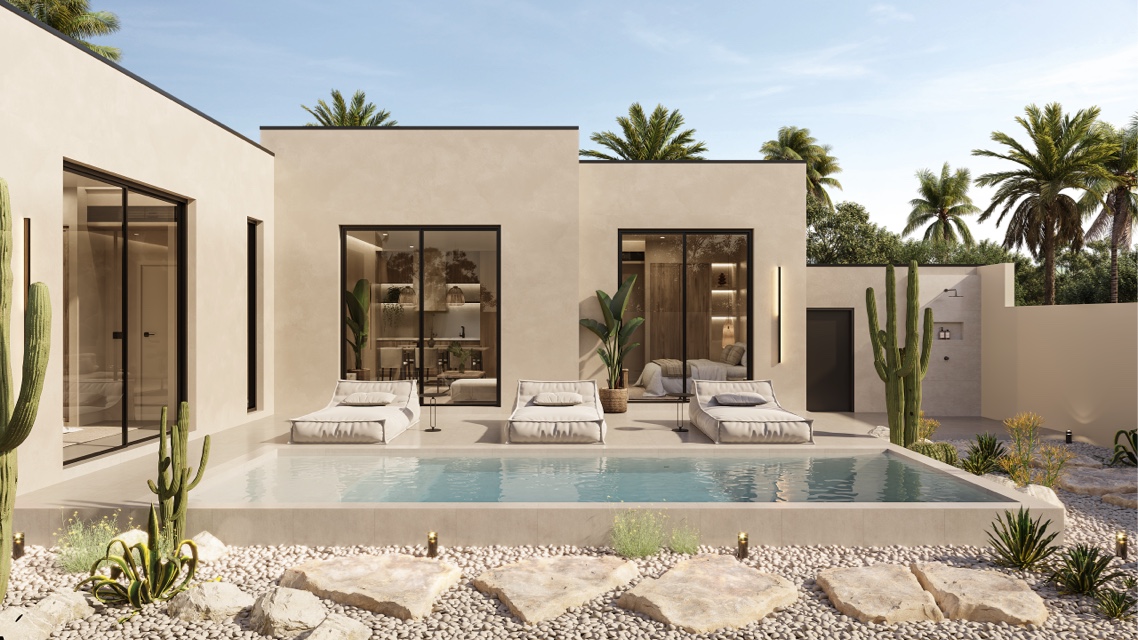
Floor plans, yield projections, pricing and area comparisons — delivered within 24 hours.
A walkthrough of Sunrise Lake Phuket — SKHAI’s flagship development in the Cherng Talay corridor. 3–4 bedrooms, private pool, from THB 9.99M.
Staylar is SKHAI's in-house rental management brand, purpose-built to maximise villa rental income while delivering a five-star guest experience. When you're not using your villa, Staylar operates it like a boutique hotel — every booking, guest interaction, and maintenance task handled on the ground by a dedicated local team. Staylar distributes your property across all major booking platforms — Airbnb, Booking.com, Agoda, VRBO — as well as a direct booking engine and partnerships with luxury travel agents and concierge services. Revenue management is dynamic: pricing adjusts in real time based on seasonal demand, competitor rates, local events, and booking pace, ensuring your villa captures maximum revenue per available night throughout the year. Guest management is end-to-end: from pre-arrival screening and airport transfers to in-villa check-in, daily housekeeping, concierge services, and responsive maintenance. Every guest touchpoint is managed to drive 5-star reviews, which in turn drives future bookings and higher nightly rates. Owners receive transparent monthly reporting through a dedicated dashboard showing occupancy, revenue, expenses, and net income. Owner-use periods are pre-agreed and protected — your villa is always available when you want it.
Phuket's west coast villa investment market is concentrated in five key corridors, each with distinct characteristics in terms of yield, occupancy, price point, and appreciation trajectory. The table below benchmarks SKHAI developments against the broader market in each area, using data from Knight Frank Thailand, CBRE Thailand, C9 Hotelworks, and Bamboo Routes. SKHAI developments are highlighted in the table. Note that SKHAI's positioning in Pasak 8 and Manik delivers comparable yields and occupancy to core Bang Tao and Cherngtalay — the island's most established investment corridors — at entry prices 30-40% below beach-adjacent equivalents. This pricing advantage reflects the corridor's inland position rather than any difference in rental demand or management quality.
| Area | Net Yield | Occupancy | Appreciation | Market Price | SKHAI Project | SKHAI Price |
|---|---|---|---|---|---|---|
| Pasak 8 (Choeng Thale) | 6-8% | 70-80% | 8-12% | 15M – 40M+ | Sunrise Valley | 13.99M – 29.99M · Last Few |
| Manik (Bang Tao) | 6-8% | 70-80% | 8-12% | 15M – 40M+ | Sunrise Lake | 9.99M – 29.99M · Pre-Launch |
| Bang Tao Beach | 6-8% | 70-80% | 6-10% | 15M – 80M+ | Garden, Palms | Resale — contact |
| Cherng Talay | 6-8% | 75-85% | 10-14% | 15M – 140M | — | — |
| Kamala Beach | 6-8% | 72-82% | 8-12% | 50M – 150M+ | Novotel | N/A |
Sources: Knight Frank Thailand 2024/25, CBRE Thailand H1 2025, C9 Hotelworks Feb 2025, Bamboo Routes 2026. Net yields represent well-managed short-term rental villas after fees. All figures indicative.
A 3-bedroom pool villa in Phuket’s premium Cherng Talay corridor. Developer-direct pricing with freehold or leasehold options, and full Staylar rental management from handover.
SKHAI is an integrated developer and rental management company across Phuket, Koh Samui, Bali, Mykonos and Ibiza. Our in-house management brand Staylar gives us real yield data — not projections from third parties.
Request investment pack →Phuket is not just Thailand’s most popular resort island — it is the single most active villa investment market in Southeast Asia. In 2024, the island recorded approximately 600 villa sales, a figure roughly four times pre-pandemic levels and a clear signal that the market has entered a new phase of institutional-grade demand.
Several structural factors underpin this position. First, tourism recovery has been near-complete: 9.89 million visitors arrived in 2024, airport passenger throughput hit 16.2 million, and hotel occupancy averaged 79.5% across the west coast. Phuket now operates at or above 2019 volumes, and forward bookings for 2025–2026 high season suggest this trajectory will continue. Second, the island’s geography imposes a natural supply constraint. With just 576 square kilometres of land area — much of it mountainous interior or protected national park — developable west coast land is genuinely finite. Beachfront plots in Bang Tao, Surin, and Kamala are now effectively exhausted, pushing new development inland while supporting consistent price appreciation for existing stock.
Third, Thailand’s regulatory environment for foreign property investment is well-established, transparent, and tested across years of international transaction history. The leasehold structure used for villa ownership provides bankable tenure of up to 90 years, registered at the Land Office. Fourth, rental economics are compelling. A well-managed 3-bedroom pool villa in Phuket’s prime west coast corridors can generate 8–10% net annual yield, a return profile that compares favourably with resort markets in southern Europe, Bali, or the Caribbean — at a significantly lower entry price point.
For international investors seeking a combination of rental income, capital appreciation, and personal use in a world-class tropical destination, Phuket stands apart.
The Bangtao–Cherngtalay corridor is Phuket’s dominant west coast investment zone. According to Knight Frank Thailand, this area accounts for 49.7% of all Phuket residential supply and 56% of villa inventory. Non-branded villa land prices average THB 70,000 per square metre, while the broader area has seen 10.67x land price appreciation since 2004 — one of the strongest multi-decade growth records of any resort market in Asia. The area benefits from anchored demand: Laguna Phuket, Boat Avenue, Porto de Phuket, Blue Tree, multiple international schools, and a concentration of restaurants, beach clubs, and lifestyle amenities that create year-round occupancy even outside peak tourist season.
Layan occupies the premium northern end of the west coast, bordering Sirinat National Park and the turquoise waters of Layan Beach. Land here has appreciated 12–18% annually in recent years, and developer-grade plots are becoming increasingly scarce. Villas in Layan command higher nightly rates than Bang Tao — typically THB 15,000–45,000 per night for luxury 3–4 bedroom properties — but entry prices reflect this premium positioning. Layan suits investors with higher capital allocation seeking trophy-style assets with strong appreciation upside.
Kamala Beach sits south of Bang Tao and offers direct beachfront access within a compact village setting. Land prices range from THB 120,000 to 300,000 per square metre depending on proximity to the coast. Branded residences (InterContinental, Keemala, Rosewood) command significant premiums, while unbranded villa developments target the THB 30–80M segment. Capital appreciation has run 6–9% annually in recent years — slower than Cherngtalay but steadier. Kamala suits buyers prioritising beach proximity and lifestyle over yield maximisation.
Manik and Pasak 8 are the emerging sub-districts within the broader Bangtao ecosystem, located 2–4 kilometres inland from Bang Tao Beach. These areas experienced 80% land price growth between 2021 and 2024 as beachfront supply was absorbed and development pressure moved inland. Crucially, rental demand draws from the same tourist and expat pool as core Bang Tao: villas in Pasak and Manik achieve comparable occupancy rates and nightly rates, yet entry prices remain 30–40% below beach-adjacent equivalents. SKHAI identified this value corridor early and has concentrated its Phuket portfolio here. Current entry pricing from THB 9.99M for a private pool villa is among the most competitive in the Cherngtalay district.
Rawai in the south offers value pricing (THB 6–12M for villas) but lower rental yields and a different tourist profile. Mai Khao in the north benefits from airport proximity and large-plot availability but limited lifestyle infrastructure. Phuket Town is experiencing a domestic-driven revival with heritage shophouse conversions and urban rental demand. Each serves a different investor profile but none match the established rental economics of the west coast Bangtao–Cherngtalay corridor for international short-term rental investment.
Phuket is in the midst of the largest infrastructure investment cycle in its history, with multiple projects set to materially expand connectivity, healthcare access, and lifestyle appeal over the next five years.
The most significant is the second airport at Phang Nga, a THB 80 billion project with a design capacity of 22.5 million passengers per year. This will effectively double the island’s air capacity and relieve chronic congestion at the existing airport, which already handles 16+ million passengers annually. Construction is underway with a target opening of 2031. For property investors, the implications are clear: higher visitor volumes, year-round demand diversification, and upward pressure on asset values — particularly in the northern corridor closest to the new facility.
The Kathu–Patong Expressway (tunnel), with construction starting in 2025 and completion expected in 2029, will cut travel time between the west coast and Patong from 40 minutes to under 10 — integrating Patong’s entertainment and retail infrastructure into the daily catchment of Bangtao, Kamala, and Cherngtalay residents.
Healthcare infrastructure is expanding rapidly. Bumrungrad International Hospital Phuket is scheduled to open in Q3 2026, bringing Thailand’s most recognised private hospital brand to the island. Songklanagarind Hospital (PSU) will add a major teaching hospital facility between 2026 and 2029. These additions address a key concern for long-stay expats and retirees and strengthen Phuket’s appeal as a permanent residence destination.
International school capacity is also growing. Glenalmond College Phuket, a Scottish independent school, opens in August 2026 — joining UWC, British International School, and HeadStart in offering internationally accredited curricula. For family-oriented investors considering owner-use alongside rental income, the expanding education ecosystem is a meaningful draw.
Villa prices in Phuket have followed a remarkably consistent upward trajectory since the pandemic recovery. During 2020–2021, prices were largely stable as the market absorbed COVID-era uncertainty. From mid-2022, demand surged: villa sales volume increased 338% year-on-year as international buyers returned in force. By 2024, prices were rising 15–18% annually in prime west coast areas (Knight Frank Thailand), with transaction volumes hitting levels not seen since before the 2014 market correction.
Current pricing across the villa market spans a wide range. Entry-level pool villas in emerging areas start from THB 6–10M. Mid-market villas in Bangtao, Cherngtalay, and Kamala typically trade between THB 15–50M. Luxury and branded residences in beachfront positions or established resort developments range from THB 50M to well above THB 100M. SKHAI’s pricing sits at the competitive end of the mid-market: private pool villas from THB 9.99M in the Cherngtalay district, designed for yield-focused investors who prioritise returns over brand premiums.
Forward-looking projections from Knight Frank and Bamboo Routes indicate cumulative growth of 25–45% over the next five years, driven by infrastructure delivery, continued tourism expansion, and constrained land supply. For investment modelling, SKHAI recommends a conservative base case of 4–8% annual capital appreciation. Phuket’s villa market is overwhelmingly cash-driven (mortgage-free purchases account for the vast majority of transactions), which insulates it from interest rate sensitivity and provides a degree of counter-cyclical stability unusual in global property markets.
Purchasing a villa in Phuket as a foreign buyer follows a well-established sequence, and the process is significantly more straightforward than many international investors expect.
Acquisition costs are transparent and predictable. Transfer fee is 2% of the registered value. Stamp duty is 0.5%. Legal fees range from THB 50,000 to 150,000 depending on complexity. Total transaction costs are typically 3–4% of the purchase price — significantly below most European and North American property markets.
For off-plan villas, the construction timeline is typically 12–18 months from contract signing to handover, with payment milestones structured to align with construction progress rather than arbitrary dates.
Understanding the full cost structure of villa ownership in Phuket is essential for accurate yield modelling. The good news: operating costs are low by international standards, and the tax environment is favourable for property investors.
Operating costs:
Tax obligations:
Net yield worked example: A 3-bedroom pool villa purchased at THB 15M, generating gross rental income of THB 1,496,000 per year (THB 5,800/night average × 258 nights occupied = 70.7% annual occupancy). Deductions: management fee at 25% (THB 374,000), CAM at THB 5,000/month (THB 60,000), insurance (THB 25,000), maintenance reserve at 1.5% of value (THB 225,000), and rental withholding tax at 5% of gross (THB 74,800). Total deductions: THB 758,800. Net income to owner: THB 737,200 — equivalent to approximately 4.9% net yield at conservative occupancy. At the higher end of achievable occupancy (78%, 285 nights at THB 5,800/night = THB 1,653,000 gross), the same cost structure delivers net income of approximately THB 1,053,200 — a 7.02% net yield. Combined with 4–8% annual capital appreciation, investors typically achieve full capital recovery within 7–12 years.
Thai property law offers well-established, transparent pathways for foreign buyers — and SKHAI structures every villa development with international investors in mind from day one. Understanding the legal framework is essential for informed decision-making, and the reality is considerably more straightforward than many first-time buyers expect.
The most common and widely accepted structure for foreigners purchasing a private pool villa in Phuket — whether in Bang Tao, Cherng Talay, Kamala, or any other location — is a registered leasehold agreement.
This consists of an initial 30-year lease with two successive 30-year renewal options, giving a total tenure of 90 years. The lease is formally registered at the Land Office, providing full legal standing and long-term security for the buyer. The leaseholder has exclusive rights to occupy, modify, sublet, and transfer the property for the duration of the lease term.
This structure is used across the market by expats, holiday home buyers, and investment-focused buyers seeking rental returns — and it is the framework SKHAI uses across all its villa developments in Phuket.
A significant legal development has strengthened the leasehold position. The Thai Supreme Court has upheld the enforceability of 30+30+30 year lease renewal clauses in multiple rulings, providing judicial precedent for the full 90-year tenure. While the Civil and Commercial Code limits individual registered leases to 30 years, the renewal structure — backed by contractual obligations and corporate guarantees — is now well-established in Thai property law.
Foreigners can own condominium units freehold (outright ownership) in Thailand, provided the foreign ownership quota in the building does not exceed 49%. This is a straightforward, legally clean structure with full title deed (chanote) registration. However, it applies to condominiums only — not to land or villa developments. For investors specifically targeting private pool villas, the leasehold structure remains the standard and most practical pathway.
It is worth noting that while freehold title is the legally superior form of ownership, condominiums in Phuket deliver materially lower rental returns and capital appreciation than private pool villas. The condo segment suffers from chronic oversupply — particularly in the mid-market bracket — which depresses occupancy and nightly rates. The tourist profile booking condominiums skews more price-sensitive than the villa rental market, compressing revenue per available night. And because vertical developments are not constrained by the same land scarcity that drives villa values, capital appreciation in the condo segment has consistently underperformed. In short: superior ownership structure, inferior asset class for yield-focused investors.
SKHAI develops villas for international and local buyers and structures all documentation for all ownership structures, which are defined by the title deed and Thai law.
Leasehold is the most widely used and legally tested pathway for foreign villa investors in Thailand. Every lease is registered at the Land Office, giving you full legal standing for the duration of your tenure.
Ownership structure is ultimately a personal decision that depends on your nationality, tax situation, and long-term plans. We can connect you with independent Thai property lawyers who specialise in foreign transactions and can walk you through the options that apply to your circumstances. What matters to us is that you go into any purchase with the right advice, and what makes the most sense according to your villa project.
Before committing to any villa purchase in Phuket, buyers should verify:
SKHAI provides full documentation to support independent legal review and encourages all buyers to engage their own legal counsel. Transparency at the transaction stage is the foundation of long-term investor confidence.
Well-managed luxury pool villas in Pasak 8 and Manik typically generate 8–10% net annual yield. Staylar targets 70–80% annual occupancy, rising to 85–92% from November through April. Net yield is calculated after management fees, maintenance, and all operating costs — no gross figures dressed up as net.
This aligns with wider Phuket market performance. Private pool villas in high-demand areas consistently earn 8–10% through short-term holiday lets, particularly during high season. Bang Tao and Cherng Talay deliver some of the most consistent year-round rental demand on the island — which is precisely why SKHAI focuses its developments within this corridor.
Pasak 8 and Manik sit within the broader Bang Tao / Choeng Thale corridor, directly adjacent to the Laguna Phuket ecosystem. Rental demand draws from the same international tourist and expat pool — beach clubs, international schools, Boat Avenue, Porto de Phuket — but entry prices remain meaningfully lower.
Beachfront land in Bang Tao is now effectively exhausted. New villa developments are moving inland to areas like Pasak — just 2 km from the beach — where land prices rose 80% between 2021 and 2024. SKHAI established its position in this corridor early. Bang Tao core and Cherng Talay now start from THB 15M–20M for comparable villas, while SKHAI projects deliver the same yield profile from THB 10–15M.
Sunrise Lake in Manik starts from THB 9.99M at pre-launch. Sunrise Valley’s last remaining unit starts from THB 13.99M. Detailed pricing and payment structures are available on enquiry.
SKHAI is among Phuket’s most competitively positioned developers for luxury private pool villas — purpose-built for rental yield and high-quality living in the Bang Tao corridor. Contact us to buy a villa in Phuket.
Villa prices in Cherng Talay and Bang Tao rose 15–18% year-on-year in 2024, with the market projected to grow a further 10–15% in 2025, driven largely by villa-led demand. Over the five-year period from 2020 to 2025, well-located Phuket villas appreciated 30–40% according to Knight Frank Thailand. For investment modelling, we recommend using 4–8% annual capital growth as a conservative base case.
In the Bang Tao corridor, the 3-bedroom private pool villa is the strongest performing layout. It serves both family groups and friend groups — the two dominant booking profiles for luxury short-term rentals in Phuket — maximising both nightly rate and occupancy across the calendar year. The 2-bedroom and 4-bedroom configurations rank second and third respectively. SKHAI designs its villas specifically around this demand profile.
Foreign villa owners in Phuket face a straightforward and relatively favourable tax environment. The primary obligations are:
Thailand maintains double taxation agreements with over 60 countries, including the UK, Germany, Australia, France, and most EU member states. These treaties determine how Thai-source rental income and capital gains are treated in your home jurisdiction. We strongly recommend consulting a tax advisor in your country of residence to understand the net position under the applicable treaty.
In practice, the total annual tax burden on a Phuket villa generating rental income is typically 1–3% of gross revenue — materially lower than equivalent obligations in southern Europe, the US, or Australia.
Off-plan investment in Phuket carries inherent construction risk, as it does in any market. However, several factors mitigate this risk significantly when dealing with established developers.
Developer track record is the primary safeguard. Before committing to any off-plan purchase, verify the developer’s history: how many projects have they completed? Are those projects occupied and generating rental income? Can you speak to existing owners? SKHAI has delivered 50+ pool villas across five destinations, with completed projects operating on the Staylar rental programme — live performance data is available on request.
Payment milestones tied to construction progress protect buyers from paying ahead of delivery. A typical SKHAI payment schedule structures instalments around foundation, structure, roofing, fit-out, and completion milestones. You pay as the build progresses, not upfront.
Escrow arrangements are available for buyers who require additional protection. Funds are held by a third-party escrow agent and released to the developer only upon verified completion of each construction milestone.
Legal protections are strengthening. Thailand’s Office of the Consumer Protection Board (OCPB) has introduced enhanced regulations for off-plan property sales, including mandatory disclosure requirements, standardised contract terms, and clearer remedies for construction delays or defects.
Independent legal review is essential. Engage a Thai property lawyer who is independent of the developer to review all contracts before signing. SKHAI encourages this and provides full documentation to support the process.
The off-plan pricing advantage — typically 15–25% below completed villa prices in the same area — compensates for the construction wait and associated risk. For investors with a 2–3 year horizon, off-plan purchase at pre-launch pricing offers the strongest total return potential.
Financing options for foreign buyers in Phuket are more limited than in many Western markets, but several pathways exist depending on your circumstances.
Thai bank mortgages are available to foreigners for condominium purchases (typically 50–70% loan-to-value), but villa financing from Thai banks is uncommon for non-residents. Some Thai banks will consider villa mortgage applications from foreigners who hold a Thai work permit and have established Thai income.
Developer payment plans are the most common financing mechanism for villa purchases. SKHAI offers structured payment schedules for off-plan purchases, spreading the total cost across 12–18 months of construction milestones. This effectively provides interest-free financing during the build period without requiring a bank mortgage.
International equity release and portfolio lending: Many buyers finance their Phuket villa by releasing equity from existing property assets in their home country or through portfolio-backed lending facilities. This approach often provides more favourable terms than Thai domestic financing, as the lending institution is secured against assets in a jurisdiction they understand.
Post-completion rental income supports the ongoing economics of ownership. For buyers who fund the purchase from savings or equity release, the 8–10% net rental yield effectively reduces the real cost of capital over the holding period.
In practice, the majority of villa transactions in Phuket are cash purchases. The absence of mortgage dependency across the buyer base is one of the factors that makes the market resilient to interest rate cycles and credit tightening — a structural advantage over leveraged property markets.
Timing a villa purchase in Phuket depends on your investment objective, budget, and risk appetite. Several factors influence the optimal entry point.
Off-plan at pre-launch offers the lowest entry price. Developers typically offer 15–25% below projected completion pricing during the pre-launch phase to secure early reservations and fund construction. SKHAI’s Sunrise Lake, currently at pre-launch from THB 9.99M, exemplifies this pricing advantage — comparable completed villas in the same corridor trade at THB 13–18M.
Seasonal timing has limited impact on pricing but affects the buying experience. High season (November–April) provides the best weather for site visits and the most vibrant lifestyle experience, but competition for desirable units is highest. Green season (May–October) offers a quieter viewing experience and potentially more flexibility on terms, but construction may be affected by weather delays.
Market cycle position matters. Phuket villa prices have risen consistently since 2022, and forward projections indicate continued growth driven by infrastructure delivery and constrained supply. The question is not whether prices will be higher in three years (consensus suggests yes), but whether current pricing offers better value than waiting for the next pre-launch or the next cycle trough. In a supply-constrained island market with growing demand, the cost of waiting typically exceeds the benefit.
Pre-launch is the single most advantageous moment to buy. Early reservation at a new development combines the lowest possible price point with the widest unit selection. Once construction begins and the development gains visibility, prices increase at each subsequent phase. Contact SKHAI to access pre-launch pricing on current developments.
Both Phuket and Koh Samui are established villa investment destinations in Thailand, but they serve different investor profiles and offer meaningfully different risk-return characteristics.
Market size and liquidity: Phuket is the larger, more liquid market by a significant margin. With approximately 600 villa sales in 2024 compared to an estimated 80–120 on Koh Samui, Phuket offers substantially more transaction activity, which translates into faster resale, more reliable price discovery, and a broader pool of buyers and tenants.
Entry pricing: Phuket and Koh Samui entry prices are broadly comparable across the SKHAI portfolio. Samui villas typically offer sea view or jungle view positions that command their own premium, and the island’s geography means higher construction and logistics costs. Both markets deliver comparable net yields under the Staylar management programme.
Tourism base: Phuket benefits from an international airport with direct connections to 30+ countries, 16+ million annual passengers, and 9.89 million visitors in 2024. Koh Samui’s airport is privately operated (Bangkok Airways), limiting competition and capacity. Samui’s tourism base is more seasonal and more dependent on a smaller number of source markets.
Rental yields: Well-managed villas achieve 8–10% net in Phuket versus 6–8% net in Koh Samui, reflecting Phuket’s higher occupancy rates and stronger year-round demand. Samui’s green season occupancy drops more sharply than Phuket’s, compressing annual yields.
Capital appreciation: Phuket has delivered 15–18% annual price growth in prime areas versus 8–12% in Koh Samui. Phuket’s infrastructure pipeline (second airport, expressway, hospitals) provides stronger growth catalysts over the next 5–10 years.
SKHAI operates in both markets, with villa developments in both Phuket and Koh Samui. For investors prioritising yield, liquidity, and infrastructure-driven appreciation, Phuket is the stronger choice. For those seeking lower entry prices, a quieter island lifestyle, and long-term value with less competition, Koh Samui merits consideration. Contact us to discuss which destination suits your investment goals.
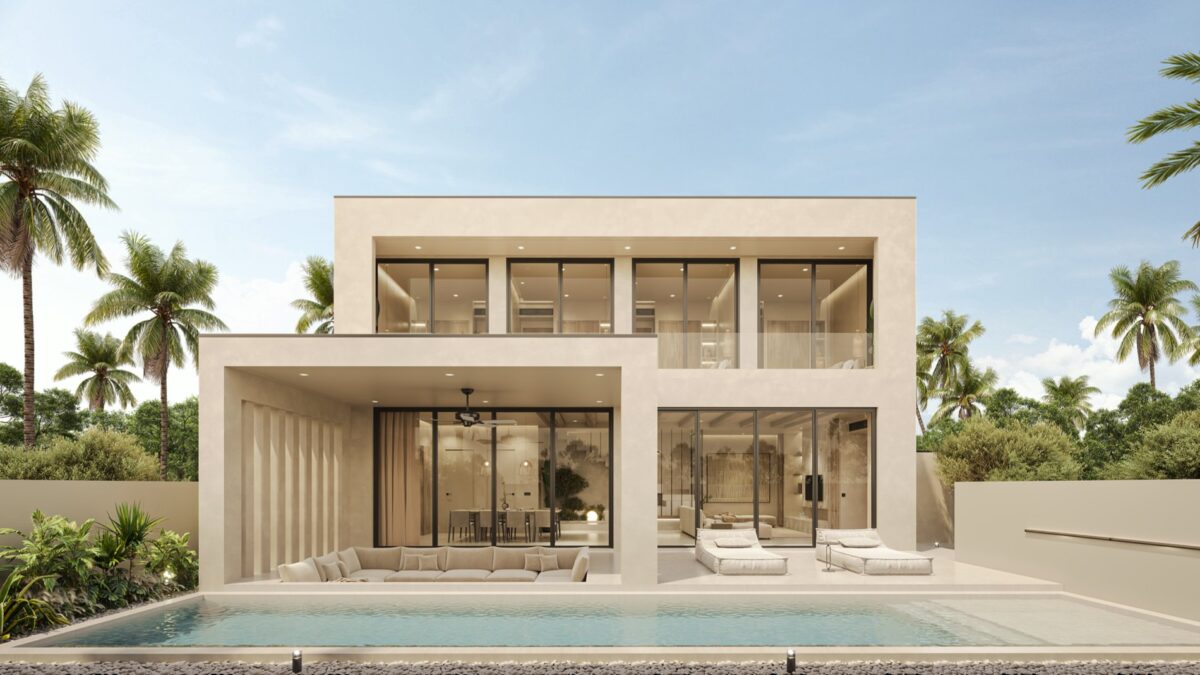
Floor plans, net yield projections, Staylar occupancy benchmarks, legal structure guides and area comparisons — delivered within 24 hours.
50+ pool villas delivered · 5 destinations · Established 2019
Two quick questions so we send the right information.