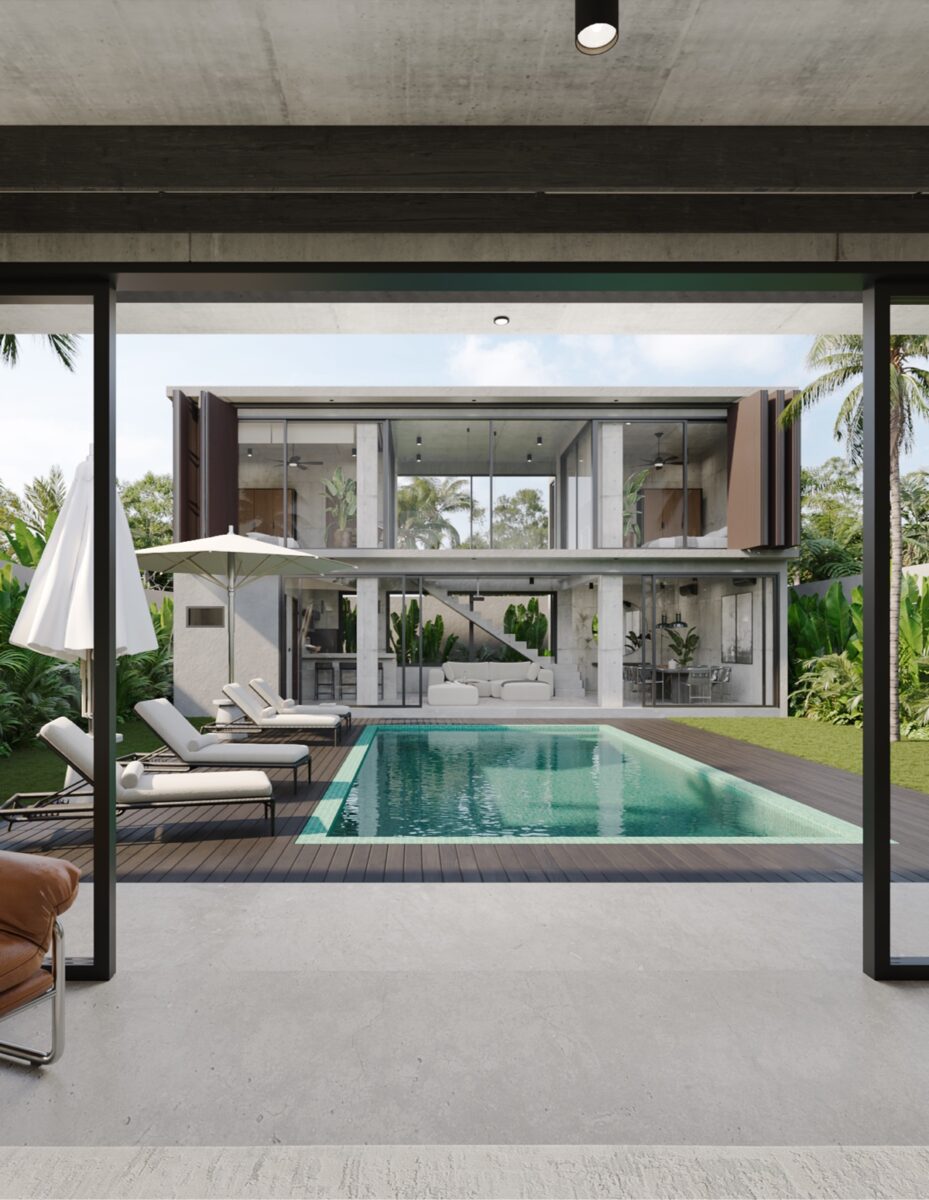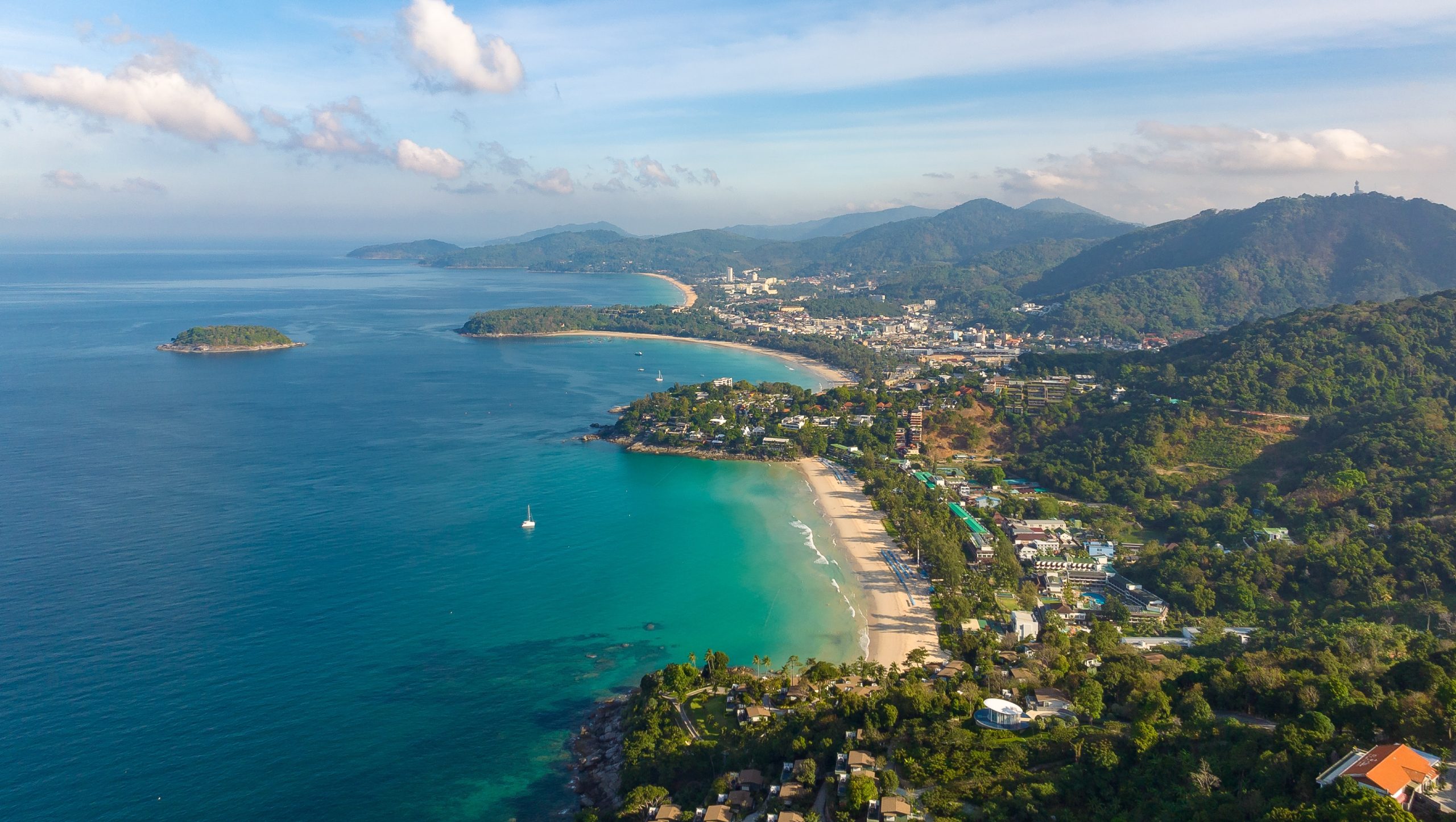
Aerial view showcasing sea view villas Koh Samui along the coastline
Phuket Property Market 2026: Prices, Yields & Foreign Ownership Guide
In this article15 sections
- Phuket Property Market 2026: Where the Numbers Stand
- Price Benchmarks by Area (2026)
- Yield Data: What Phuket Villas Actually Return
- Foreign Ownership Options in Phuket
- Infrastructure Developments Driving Property Values
- Market Dynamics: What Is Driving Demand
- Seasonal Revenue Pattern
- SKHAI Developments in Phuket
- Risks to Consider
- The True Cost of Buying a Villa in Phuket
- Sample Investment Scenario: 3-Bedroom Villa in Cherngtalay
- Phuket vs Other Investment Destinations
- Buying Process Timeline
- The Rental Management Advantage in Phuket
- Frequently Asked Questions
Phuket Property Market 2026: Where the Numbers Stand
Phuket’s villa market recorded a 20%+ increase in transactions during 2025, 1,263 new villa launches (up 51% from 2023), and a 76% cumulative sales rate for luxury properties priced above $2.6 million (90 million THB). The island’s International Airport processed 19.7 million passengers in 2024 — and a second international airport is now in planning, designed to handle an additional 12.5 million passengers annually.
These are not projections. They are recorded data points from Knight Frank Thailand, the Tourism Authority of Thailand, and Phuket’s Land Department. This guide breaks down what they mean for investors considering the island’s property market in 2026.
Price Benchmarks by Area (2026)
Phuket villa pricing varies significantly by micro-location. Here are current benchmarks for the key investment zones:
| Area | Pool Villa Entry Price (USD) | Price/sqm (USD) | Investment Profile |
|---|---|---|---|
| Bangtao / Cherngtalay | From $430,000 | $2,000-$3,500 | Highest rental demand, premium pricing |
| Layan / Pasak 8 | From $275,000 | $1,700-$2,800 | Best value-to-yield ratio, emerging corridor |
| Kamala | From $570,000 | $2,500-$4,000 | Branded developments, beachfront premium |
| Surin | From $715,000 | $3,000-$5,000 | Ultra-premium, capital appreciation focus |
| Kata / Karon | From $345,000 | $1,500-$2,500 | Established tourism base, moderate yields |
| Rawai / Nai Harn | From $230,000 | $1,200-$2,000 | Budget entry, lifestyle-oriented |
| Manik / Cherngtalay (inland) | From $275,000 | $1,400-$2,200 | New infrastructure corridor, high growth potential |
Market median: Approximately $2,000 per sqm (70,000 THB/sqm), though prime west coast developments command premiums of 40-100% above this baseline.
Yield Data: What Phuket Villas Actually Return
Generic “yield” figures in Phuket marketing materials range from 6% to 12% — a spread so wide it is functionally useless. Here is verified performance data from SKHAI’s portfolio, managed by STAYLAR (SKHAI’s in-house hospitality management company):
| Development | Area | Net Yield | Occupancy | ADR |
|---|---|---|---|---|
| Sunrise Garden | Cherngtalay | 8.4% | 78% | $285 |
| Sunrise Palms | Pasak | 8.1% | 74% | — |
| Sunrise Valley | Cherngtalay | 7.8% | 72% | — |
These are net yields — after management fees (20-30%), platform commissions, maintenance, insurance, utilities, and all operating costs. The gap between gross and net in Phuket’s market is typically 25-35%. Any developer quoting yields above 10% is almost certainly quoting gross.
For comparison: London buy-to-let averages 3.2% net. Sydney averages 2.8%. A well-managed Phuket villa delivers 2.5-3x these benchmarks while offering a tropical lifestyle asset.
Foreign Ownership Options in Phuket
Ownership structure is the first question most international buyers ask — and the area with the most misinformation. Here are the three legitimate options available in 2026:
1. Freehold condominium
Foreigners can own condominium units freehold (100% ownership) provided the building’s foreign quota (49% of total sellable area) is not exceeded. This is the simplest legal structure and provides the strongest property rights. However, condominiums generally deliver lower capital appreciation and rental yields than villas.
2. Leasehold (30-year registered lease)
The standard structure for villa ownership by foreigners. A 30-year lease is registered at Phuket’s Land Department, providing exclusive rights to use and occupy the property. The “30-year renewable” extension structure is common but — following a 2025 Supreme Court reaffirmation — renewal clauses are contractual promises, not guaranteed property rights. Choose your developer carefully and ensure the extension terms are robust.
3. Freehold land via Thai company
Warning: Nominee shareholder structures — where Thai individuals hold shares on behalf of a foreign buyer to circumvent the Land Code — are illegal and subject to enforcement by the Department of Special Investigation. Any developer or agent recommending this approach should be disqualified immediately. Legitimate Thai company structures exist for joint ventures with genuine Thai business partners, but these require proper legal structuring.
SKHAI supports both leasehold and freehold condominium structures across our Phuket developments. We recommend every buyer engage independent legal counsel — and we welcome it. Read our full ownership structure comparison.
Infrastructure Developments Driving Property Values
Phuket’s property market is increasingly driven by infrastructure investment that directly impacts both lifestyle quality and property values:
Second International Airport
The most significant development on the horizon. Planned for Phuket’s south, the new airport targets 12.5 million passengers annually — effectively doubling the island’s air capacity. For property investors, this means:
- Reduced congestion at the current airport (which is near capacity at 19.7 million passengers)
- Opening of southern areas (Rawai, Nai Harn, Kata) to more convenient international access
- Price appreciation in the airport corridor before construction begins (early-mover advantage)
- Increased year-round tourism capacity, supporting occupancy outside peak season
Road and transport upgrades
The Kathu-Patong expressway, improvements to Route 4028, and the planned Phuket light rail system are reducing journey times between the airport and key tourism zones. Properties along these corridors benefit from improved accessibility without the premium pricing of established beachfront areas.
Healthcare and education infrastructure
Phuket now hosts multiple international standard hospitals (Bangkok Hospital Phuket, Phuket International Hospital) and several international schools (British International School Phuket, HeadStart, UWC Thailand). This infrastructure supports the long-stay and retirement market — an increasingly significant rental demand segment.
Marina and lifestyle developments
The expansion of Royal Phuket Marina, Porto de Phuket, and Boat Avenue is creating lifestyle hubs that anchor property values in adjacent areas. Bangtao and Cherngtalay benefit directly from this clustering effect.
Market Dynamics: What Is Driving Demand
Tourism: 19.7 million passengers and growing
Phuket International Airport’s 19.7 million passenger throughput in 2024 represented near-capacity operations. Long-haul arrivals — the segment most relevant to villa rentals — hit an all-time high in 2025, led by the UK, USA, and Australia. The Tourism Authority of Thailand targets 36.7 million foreign arrivals nationally in 2026, with Phuket expected to capture the lion’s share of luxury tourism demand.
Buyer demographics shifting
The buyer profile in Phuket has evolved significantly. The market is no longer dominated by retirees. Current buyer segments include:
- Investment-focused buyers (40-55): Seeking yield + capital growth, often purchasing off-plan
- Remote workers and digital nomads (30-45): Buying for lifestyle + rental income during travel periods
- Family relocators (35-50): Drawn by international schools, healthcare, and quality of life
- Traditional retirees (55+): Still significant but no longer the dominant segment
- Institutional investors: Increasingly active in the luxury villa segment, signaling market maturity
Supply: constrained and getting tighter
Despite 1,263 new villa launches in 2024, Phuket’s prime development land is finite. The west coast (Bangtao to Kamala) — which commands the highest rental demand — has limited remaining developable land. Construction costs rose 8-12% in 2025 due to material and labor inflation. These supply constraints support pricing for existing and newly completed properties.
Seasonal Revenue Pattern
Understanding Phuket’s seasonal revenue distribution is critical for accurate yield projections:
| Season | Months | Occupancy Range | Revenue Share |
|---|---|---|---|
| Peak (High Season) | Dec – Feb | 80-95% | ~35% of annual revenue |
| Shoulder (High) | Nov, Mar – Apr | 65-80% | ~25% of annual revenue |
| Shoulder (Low) | May, Oct | 45-60% | ~15% of annual revenue |
| Low Season | Jun – Sep | 35-50% | ~25% of annual revenue |
Low season is not dead season. Aggressive pricing, long-stay promotions, domestic tourism, and event bookings can maintain 35-50% occupancy even during the monsoon months. Professional management — like STAYLAR’s dynamic pricing approach — is the difference between a 55% annual occupancy and a 78% annual occupancy.
SKHAI Developments in Phuket
SKHAI currently has three active developments in Phuket, all managed by STAYLAR for rental program investors. You can browse all current Phuket villas for sale with live pricing and availability:
- Sunrise Garden Phuket — Cherngtalay, 3-bedroom pool villas. 8.4% net yield, 78% occupancy. From $275,000.
- Sunrise Palms Phuket — Pasak 8 corridor, 3-bedroom pool villas. 8.1% net yield, 74% occupancy. From $295,000.
- Sunrise Valley Phuket — Cherngtalay hillside, 2-3 bedroom pool villas. 7.8% net yield, 72% occupancy. From $285,000.
All three developments are located in the Bangtao-Cherngtalay-Pasak corridor — the area with the strongest demonstrated rental demand on the island. Read our area-by-area Phuket investment analysis for detailed zone comparisons.
Risks to Consider
An honest market assessment requires acknowledging risks alongside opportunities:
- Oversupply in specific areas: The 51% increase in villa launches in 2024 means more inventory is entering the market. While demand has absorbed new supply overall, individual micro-locations may face pricing pressure — choose areas with demonstrated rental demand, not just development activity.
- Construction cost inflation: Material and labor costs rose 8-12% in 2025. This compresses margins for developers and may slow new supply — positive for existing property values but a cost consideration for off-plan buyers.
- Tourism dependency: Phuket’s economy is heavily tourism-dependent. A global recession, pandemic, or geopolitical event that disrupts travel would impact rental income and property values.
- Regulatory risk: Thailand’s property ownership laws can change. The 2025 Supreme Court ruling on lease renewal clauses is a reminder that legal structures require careful attention.
- Chinese recovery uncertainty: China sent 10.9 million visitors to Thailand in 2019 but only 4.47 million in 2025. Full recovery of this market remains uncertain.
The True Cost of Buying a Villa in Phuket
Beyond the purchase price, Phuket villa acquisition involves several additional costs that must factor into your investment calculation:
| Cost Component | Amount | Notes |
|---|---|---|
| Purchase price | $275,000 – $1,430,000+ | Varies by area, size, and stage (off-plan vs completed) |
| Transfer fee | 2% of appraised value | Typically split 50/50 between buyer and seller |
| Stamp duty | 0.5% of appraised value | Payable at transfer |
| Legal fees | $1,430 – $4,300 | Independent contract review and due diligence |
| Annual property tax | 0.02-0.1% of appraised value | Minimal — typically a few hundred dollars per year |
| Management fees | 20-30% of gross rental income | Includes platform commissions, marketing, operations |
| CAM/maintenance | $115-$285/month | Common area maintenance, SKHAI developments at lower end |
| Insurance | $430-$1,145/year | Building and contents coverage |
Total acquisition costs (beyond purchase price) typically add 3-4% to your initial outlay. Annual operating costs range from 30-40% of gross rental income when management is included — which is why net yield figures (as provided in SKHAI’s STAYLAR data above) are the only meaningful investment metric.
Sample Investment Scenario: 3-Bedroom Villa in Cherngtalay
Here is a real-world investment scenario based on STAYLAR portfolio data from Sunrise Garden Phuket:
| Year | Purchase Value | Net Rental Income | Capital Appreciation (7%) | Cumulative Total Return |
|---|---|---|---|---|
| Purchase | $275,000 | — | — | — |
| Year 1 | $294,250 | $23,100 (8.4% net) | $19,250 | $42,350 (15.4%) |
| Year 2 | $314,847 | $24,717 | $20,597 | $87,664 (31.9%) |
| Year 3 | $336,886 | $26,447 | $22,039 | $136,150 (49.5%) |
| Year 5 | $385,674 | $30,253 (cumulative ~$135K) | — | ~$245,674 (89.3%) |
Key assumptions: 8.4% net yield (Sunrise Garden actual), 7% annual capital appreciation (conservative mid-range for Phuket west coast), no personal use periods. Rental income grows with property value. This scenario projects near-doubling of total investment value within 5 years — driven by the combination of yield and appreciation.
Phuket vs Other Investment Destinations
How does Phuket stack up against the most common alternative destinations for villa investment?
| Metric | Phuket | Bali | Koh Samui | Algarve (Portugal) |
|---|---|---|---|---|
| Net yield (managed) | 7.8-8.4% | 8.0% | 7.2-7.5% | 3.5-4.5% |
| Capital appreciation | 5-10%/yr | 8-12%/yr | 6-8%/yr | 3-5%/yr |
| Entry price (pool villa) | From $275K | From $320K | From $250K | From $450K |
| Foreign ownership | Leasehold / freehold condo | Hak Pakai (25+20yr) | Leasehold / freehold condo | Freehold |
| Year-round tourism | Strong (seasonal bias) | Strong (seasonal bias) | Dual-peak season | Very seasonal (Jun-Sep) |
| Infrastructure maturity | High | Medium-High | Medium | High |
| Rental market depth | Deep, diversified | Growing rapidly | Medium, European-focused | Thin, summer-only |
Phuket’s combination of high yields, infrastructure maturity, and rental market depth makes it the most balanced option for investors prioritizing income. Bali competes on capital appreciation. Koh Samui offers the lowest entry price. European destinations offer freehold ownership but significantly lower yields. Read our detailed destination comparison for deeper analysis.
Buying Process Timeline
From initial inquiry to rental income, here is a realistic timeline for purchasing a villa in Phuket:
| Stage | Timeline | Key Actions |
|---|---|---|
| Research & shortlisting | 2-4 weeks | Review developments, request investment guides, compare yield data |
| Site visit | 2-5 days | Tour completed projects, inspect build quality, meet developer team |
| Legal due diligence | 2-3 weeks | Independent lawyer reviews contracts, title, permits, ownership structure |
| Reservation & contract | 1-2 weeks | Sign purchase agreement, pay deposit/first milestone |
| Construction (off-plan) | 12-18 months | Milestone payments as construction progresses |
| Handover & management setup | 2-4 weeks | Final inspection, snagging, STAYLAR onboarding |
| First rental income | 1-2 months post-handover | Villa listed across platforms, bookings begin |
For completed properties, the process compresses to 4-8 weeks from reservation to rental income. SKHAI’s investment team guides buyers through every stage — start by requesting our Phuket investment guide.
The Rental Management Advantage in Phuket
Phuket has the deepest pool of professional villa management operators in Southeast Asia. This is a material advantage for investors: the difference between professional and amateur management is typically 30-50% in annual revenue.
SKHAI’s in-house management company, STAYLAR, operates all SKHAI developments with a hospitality-grade service model that includes:
- Dynamic pricing: Nightly rates adjust based on season, demand, events, competitor pricing, and booking lead time. The difference between fixed pricing and dynamic pricing can be 25-40% in annual revenue. During Phuket’s Songkran period (April), rates for well-positioned villas can spike 50-80% above baseline.
- Multi-platform distribution: Every villa is listed on Airbnb, Booking.com, Agoda, Vrbo, luxury villa platforms (The Asia Collective, Villalet, LVH), and STAYLAR’s direct booking channel. Each platform reaches a different audience segment. Single-platform dependency is the most common revenue-limiting mistake in self-managed properties.
- 5-star guest operations: Pre-arrival communication, airport transfers, welcome amenities, daily housekeeping, concierge services, and 24/7 guest support. Review scores above 4.8/5 are the single strongest predictor of future booking volume and pricing power.
- Preventive maintenance: Scheduled pool servicing, air conditioning maintenance, pest control, garden care, and annual deep cleaning. Proactive maintenance costs a fraction of reactive repair — and prevents the negative reviews that damage future bookings.
- Monthly reporting: Revenue statements, occupancy data, expense breakdowns, guest demographics, and competitive market analysis. Investors have complete visibility into their property’s performance.
The result: STAYLAR-managed properties in Phuket achieve 72-78% annual occupancy and 7.8-8.4% net yield — performance that requires professional-grade revenue management, guest operations, and maintenance systems. Read the full STAYLAR management guide.
Frequently Asked Questions
Is Phuket property a good investment in 2026?
Based on current data: 20%+ transaction growth, 7.8-8.4% net yields in managed portfolios, 5-10% annual price appreciation, and a tourism market approaching pre-pandemic highs. The fundamentals are strong, but returns depend on location selection, property quality, and management — not the market overall.
What is the average villa price in Phuket?
The market median is approximately $2,000/sqm ($70,000 THB/sqm). Pool villas start from $230,000 in emerging southern areas and range to $430,000-$1,430,000+ on the west coast (Bangtao, Layan, Kamala, Surin).
Can foreigners buy property in Phuket?
Yes, through three structures: freehold condominium (up to 49% foreign quota), registered 30-year leasehold (standard for villas), or legitimate Thai company structures (not nominee arrangements, which are illegal). See our detailed ownership guide.
What are the best areas to buy in Phuket?
For rental yield: Bangtao-Cherngtalay-Layan corridor (highest demand, strongest data). For capital appreciation: Kamala and Surin (premium pricing, branded developments). For value entry: Manik-Cherngtalay inland corridor and Rawai-Nai Harn.
How much rental income can a Phuket villa generate?
A well-managed 3-bedroom pool villa purchased at $275,000-$430,000 can generate $20,000-$51,000 net annual rental income based on current STAYLAR portfolio data (7.8-8.4% net yield, 72-78% occupancy).
What is the Phuket second airport timeline?
The project is currently in planning and feasibility stages, with construction expected to take 4-6 years from approval. Property in the planned corridor may appreciate before construction begins — a pattern seen with previous infrastructure projects in Thailand.
Is off-plan or completed better in Phuket?
Off-plan offers 15-25% price discount and staggered payments. Completed offers immediate rental income. In a rising market with strong demand, off-plan provides better total returns due to built-in appreciation during construction. Read our off-plan analysis.
How does Phuket compare to Koh Samui for investment?
Phuket offers higher absolute yields (7.8-8.4% vs 7.2-7.5%), deeper liquidity, and more mature infrastructure. Koh Samui offers lower entry prices and a dual-peak season. Both are strong markets — many investors hold properties in both. See our full destination comparison.
Ready to explore Phuket villa investment? Visit our Phuket investment page for current availability, or schedule a consultation with our investment team to discuss your objectives.
Data sources: Knight Frank Thailand, Tourism Authority of Thailand, Phuket Land Department, SKHAI/STAYLAR portfolio data. Last updated: March 2026.
Stay informed
Curated luxury real estate insights — direct to your inbox.
Ready to Invest?
Explore our investment guides for Phuket, Koh Samui, and Bali — ownership, yields, and pricing.
View Investment GuidesStay Informed
Luxury real estate insights — delivered to your inbox.
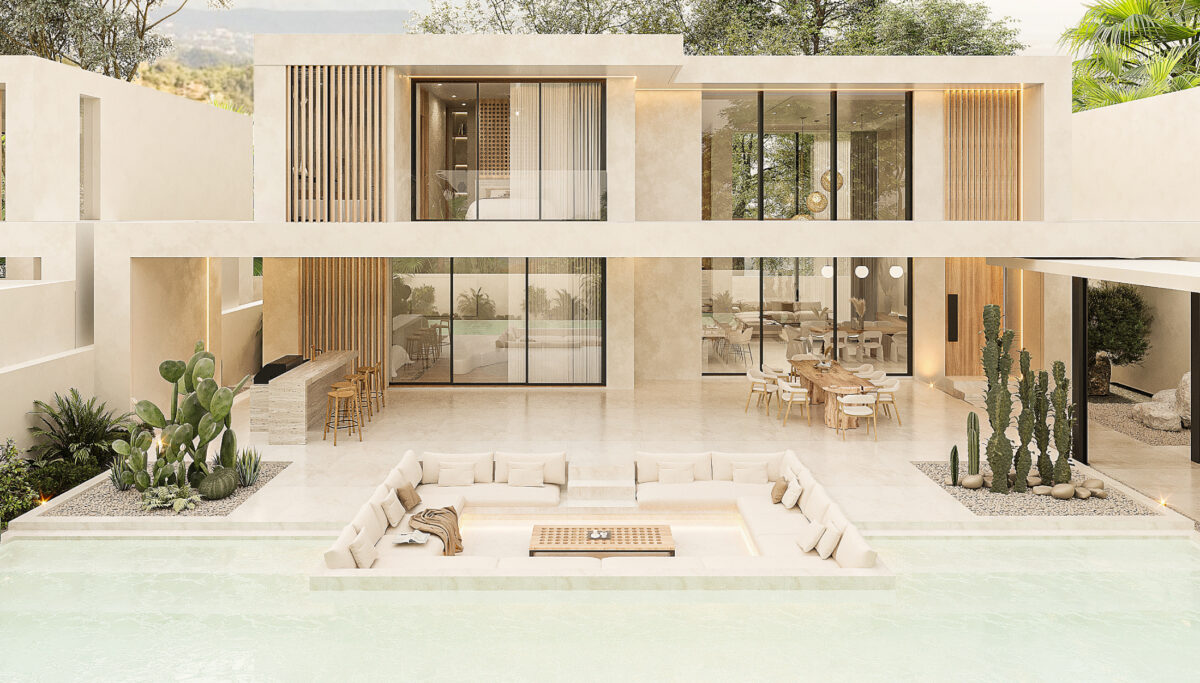
Sunrise Lake Phuket
Lakeside pool villas in Phuket — serene tropical living with strong yields.
View Development →from a Decade
in Real Estate SKHAI
10 Lessons from a Decade in Luxury Real Estate
What we’ve learned building villas across top global destinations — from due diligence to maximising rental returns.
Read the Free Guide →STAY INFORMED
Luxury living, smart investing
Curated insights on real estate investment across Phuket, Koh Samui & Bali. Direct from the developer.
Free guide sent to your inbox. No spam.